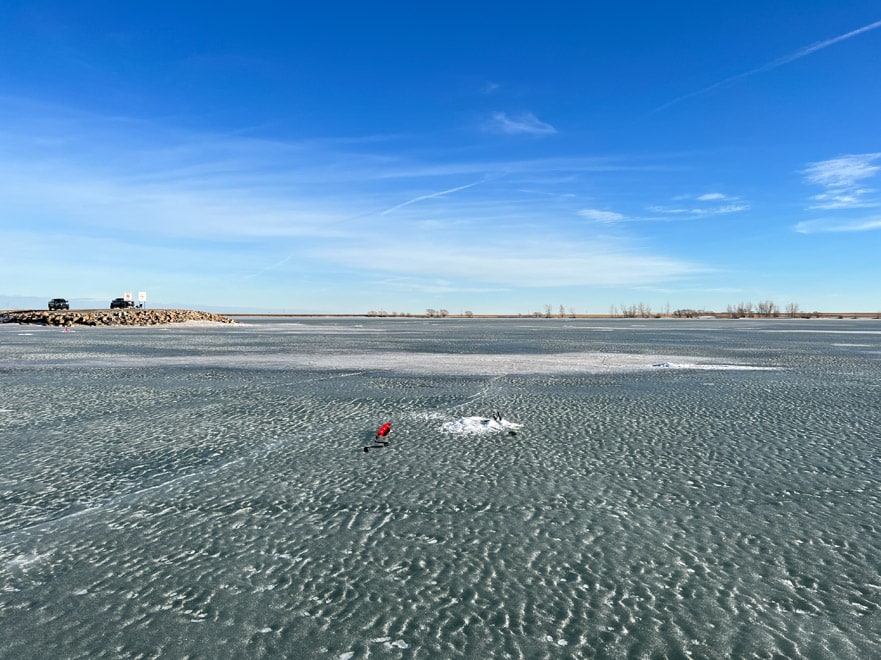
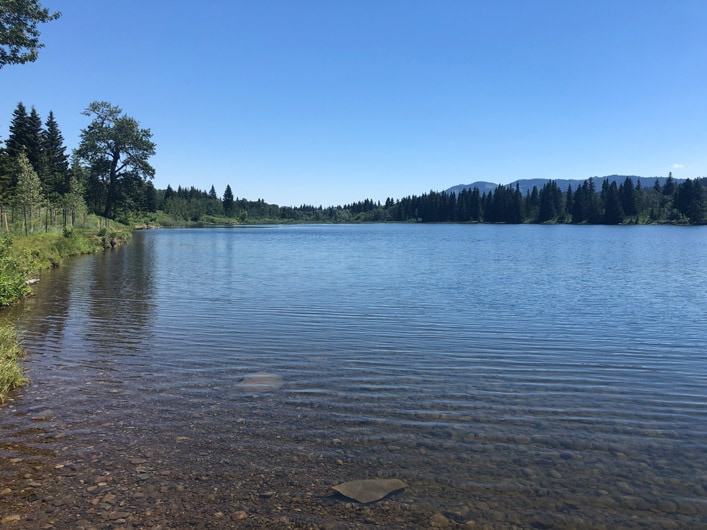
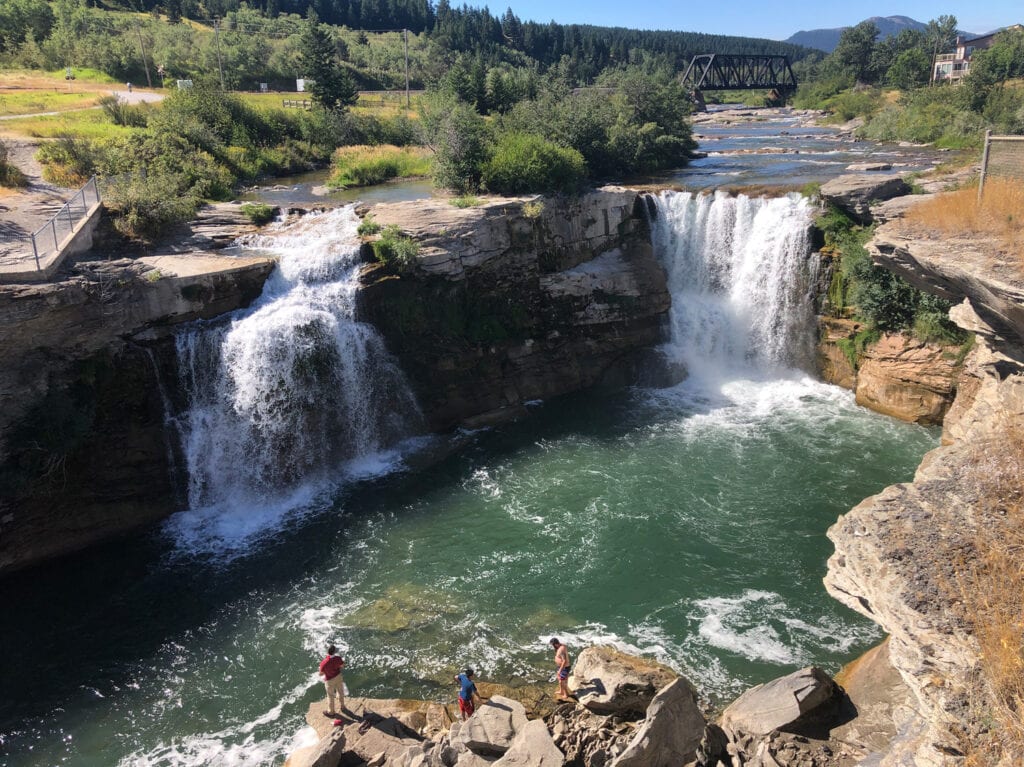
Little Bow Lake Reservoir is located about 195 km southeast of Calgary. The most common fish species in the lake are pike, walleye, burbot, perch, and whitefish.
Little Bow Reservoir is easy to misunderstand before you ever make a cast.
Search for it online and you will find anglers talking about Little Bow.
Williams Lake.
Little Bow Provincial Park.
Travers Reservoir.
Sometimes all four names appear in the same conversation.
They are not all the same place.
That confusion matters because you can drive to the wrong campground, read a fishing report from the wrong reservoir, or follow advice that was actually written for Travers Reservoir.
Once you get the location straight, Little Bow Reservoir becomes an interesting southern Alberta fishery.
It is smaller and quieter than many of the better known prairie reservoirs.
Northern pike are the fish most anglers associate with it.
Walleye are present.
Lake whitefish are a legitimate but more specialized target.
Yellow perch and burbot are part of the broader fish community.
And because this is a working irrigation reservoir, the water itself can look very different from one trip to the next.
That last point is probably the most important.
Little Bow Reservoir is not a lake where you should expect one shoreline spot to fish exactly the same way every month.
First, Make Sure You Are Going to the Right Little Bow
There are two places that constantly get confused.
Little Bow Provincial Park is on Travers Reservoir.
Little Bow Reservoir Provincial Recreation Area is on Little Bow Reservoir.
Alberta Parks explicitly warns visitors about this distinction on its current booking pages.
This is not a minor naming issue.
Travers Reservoir is much larger and has its own fishery.
Little Bow Reservoir sits farther east and has its own campground, boat launch and shoreline.
Some local anglers also call Little Bow Reservoir Williams Lake, which creates even more confusion when reading fishing discussions.
If somebody tells you they caught fish at Little Bow, ask which one.
Where Is Little Bow Reservoir?
Little Bow Reservoir is south of Vulcan in southern Alberta.
The current Alberta Parks directions place the recreation area about 20 kilometres south of Vulcan on Highway 23, then east along Highway 529 before turning south toward the reservoir.
It sits roughly between the Calgary and Lethbridge fishing regions, although it is considerably more convenient from communities such as Vulcan, Champion, Lomond and Enchant.
This is prairie reservoir country.
Expect open terrain.
Big sky.
Wind.
Agricultural land.
And a reservoir whose level is connected to a much larger irrigation system.
Little Bow Reservoir Is Part of the Bow River Irrigation System
Understanding the water system helps explain the fishing.
The Bow River Irrigation District identifies McGregor, Travers and Little Bow as the three major storage reservoirs supporting the district.
Water begins with diversion from the Bow River at Carseland, passes through the reservoir system and eventually reaches Little Bow Reservoir before continuing into the irrigation network.
Little Bow is therefore not simply a recreational lake.
Its primary job is water management.
Fishing happens on top of that.
This matters because water can be moved according to irrigation demand rather than according to what makes the shoreline convenient for anglers.
Water Level Can Completely Change Your Fishing Trip
Alberta Parks specifically warns that Little Bow Reservoir levels fluctuate throughout the year.
The park advises boaters to check the launch before using it and warns about shallow shoreline areas and submerged islands.
That should influence how you plan a fishing trip.
A good shoreline spot during higher water may become an enormous shallow flat later.
A weed edge may move.
A point may become exposed.
A drop that was easy to reach from shore may move beyond casting distance.
Your saved fishing location can remain geographically correct while becoming completely wrong for the current water level.
Little Bow and Travers Can Move Together
Little Bow Reservoir is connected with Travers Reservoir through water management infrastructure.
A major rehabilitation project was designed so the two reservoirs could operate together under a common full supply level.
That connection helps explain why anglers should think of Little Bow as part of a water system rather than an isolated pothole lake.
The Bow River Irrigation District has also documented active movement of large volumes of water through Little Bow into its main canal during irrigation season.
For fishing, the useful lesson is simple.
Check the water before assuming your old spot will look the same.
What Fish Are Actually in Little Bow Reservoir?
The three species I would consider the main fishing targets are:
-
Northern pike
-
Walleye
-
Lake whitefish
Yellow perch and burbot are also present in the fish community.
Federal environmental fisheries work for Little Bow identified northern pike, walleye and lake whitefish as the principal managed populations and also documented yellow perch, burbot, suckers and other species within the broader reservoir community.
Current public catch logs continue to be dominated by northern pike and walleye, with perch also appearing.
That does not mean every species is equally easy to catch.
They are not.
Northern Pike Are the Obvious Starting Species
If somebody asked me what to target on a first Little Bow Reservoir trip, I would probably say pike.
They suit the reservoir.
Pike use shallow structure.
Weed edges.
Points.
Bays.
Drop offs.
And transitions between shallow feeding water and deeper water.
They are also the species most consistently associated with Little Bow in current community fishing logs.
But there is an important warning before assuming Little Bow is full of pike.
Current Provincial Data Says the Pike Population Is Under Pressure
Alberta completed new Fall Index Netting work on Little Bow Reservoir in 2025.
The latest provincial summary places the northern pike population in the very high risk to sustainability category.
The walleye population received the same rating.
This is important because online fishing information can give a misleading picture.
You may find stories of very large Little Bow pike.
Those catches can be genuine.
That does not mean the reservoir currently has a strong population across all age classes.
A fishery can contain impressive older fish while having poor recruitment underneath them.
Big Pike Stories Are Not the Same as High Pike Numbers
Little Bow has a reputation for producing some substantial northern pike.
Historical community reports include fish approaching or exceeding the metre mark.
Current fishing platforms still show pike as the most prominent species in catches from the reservoir.
But those stories should change your expectations in a specific way.
Do not arrive expecting constant action.
Instead, think of Little Bow as a place where pike are a realistic target and a better fish is possible, but where current population monitoring suggests the fishery should not be treated as extremely abundant.
That is a much more accurate expectation.
Why Might Pike Recruitment Be Difficult Here?
Pike need useful shallow habitat.
Vegetation is especially important for spawning and young fish.
Little Bow Reservoir has experienced major water management changes over its history, and government fisheries work has specifically considered the relationship between reservoir operation, vegetation and pike spawning habitat.
Environmental assessment work warned that fluctuating water levels can reduce productive shoreline vegetation and affect spawning and rearing habitat.
That does not mean every water level change immediately damages the fishery.
It means reservoir operation is one important piece of the population puzzle.
Where I Would Look for Pike
I would begin with visible habitat rather than chasing a secret coordinate.
Look for:
-
Remaining weed edges
-
Shallow points
-
Drop offs beside flats
-
Irregular shoreline
-
Water entering or leaving the reservoir
-
Small bays
-
Changes from rock to softer bottom
-
Areas holding small fish
-
Windblown shoreline
If the water is high, pike may have much more shallow habitat available.
If the reservoir is lower, concentrate on the remaining structure that still connects shallow feeding water with useful depth.
Weed Edges Matter More Than Thick Weeds
Do not throw directly into the densest vegetation simply because pike like weeds.
Fish the edge.
A pike can sit inside vegetation and attack something passing through open water.
A spoon or soft plastic travelling parallel to the vegetation stays in that productive zone much longer.
This also keeps your lure from returning covered in weeds every cast.
Spoons Make Sense Here
A medium spoon is one of the easiest ways to search for Little Bow pike.
It casts well.
Covers water.
Can be worked at different depths.
And gives you enough flash to attract fish in prairie reservoir water.
Start higher if weeds are present.
Let the spoon sink longer around deeper edges.
Change retrieve speed before constantly changing colours.
Spinnerbaits Are Useful Around Vegetation
A spinnerbait is a good Little Bow option when vegetation becomes annoying.
The shape moves through weeds better than many exposed treble hook lures.
It also creates strong vibration.
That can be useful in slightly stained water or wind disturbed shoreline.
Work it along weed edges and across shallow points.
Soft Plastic Minnows Give You Better Depth Control
A soft plastic paddle tail can be one of the most useful lures on the reservoir.
Fish it shallow.
Fish it along a drop.
Let it sink toward bottom.
Retrieve it above weeds.
You can change weight without completely changing the presentation.
That is especially useful on Little Bow because changing water levels can mean changing fishing depth between trips.
Walleye Are Present, but Expectations Need to Be Realistic
Little Bow Reservoir supports walleye, and they remain one of the principal species associated with the fishery.
Current public fishing logs continue to record walleye catches.
But local angler experience often describes Little Bow as less consistent for walleye than nearby Travers Reservoir.
That distinction is useful.
If your only goal is catching walleye, do not assume Little Bow is automatically the strongest water in the local reservoir system.
If you are already camping there or want a mixed pike and walleye trip, it makes much more sense.
Current Walleye Data Is Also Concerning
The 2025 Alberta Fall Index Netting assessment classified Little Bow Reservoir walleye at very high risk to sustainability.
Again, that does not mean there are no walleye.
It means current population indicators are weak enough that the fishery deserves realistic expectations.
This is a good example of why current biological monitoring is more useful than relying on a ten year old fishing story.
Where I Would Search for Walleye
Walleye are much easier to target when you stop treating open water as one giant fishing spot.
Look for:
-
Points leading toward deeper water
-
Drop offs
-
Bottom transitions
-
Channel like depressions
-
Harder bottom
-
Areas where baitfish concentrate
-
Lower light feeding water
If you have sonar, use it.
The reservoir is small enough that searching structure is practical without spending half a day running across the lake.
Jigs Are the Simplest Walleye Tool
A jig and soft plastic gives you everything you need.
You can fish vertically.
Cast along a drop.
Work the bottom.
Change weight.
Change lure size.
The important part is knowing where your jig is.
If you never feel bottom, you may be fishing too high.
If you snag every cast, you may be too heavy or fishing too slowly.
Find the middle ground.
Low Light Is Worth Using
Walleye are built for lower light.
That means morning and evening deserve attention.
This can be especially useful for shore anglers.
You cannot drive a boat to offshore structure.
But feeding fish may move into more accessible water as light declines.
A shoreline that feels empty during bright afternoon conditions can become much more interesting toward evening.
Crankbaits Can Help You Search
If I were trying to locate Little Bow walleye rather than sit on one structure, I would bring a couple of crankbaits.
One shallower runner.
One deeper option.
Cover the edge of points and depth changes.
If you contact fish repeatedly in one area, slow down and work that zone with jigs.
The crankbait finds them.
The jig lets you stay with them.
Lake Whitefish Are the Most Overlooked Target
This may be the most interesting fish in Little Bow for anglers who enjoy learning something different.
Government fisheries material identifies lake whitefish as one of the principal fish populations in Little Bow Reservoir.
Local anglers also continue to mention whitefish specifically when discussing Little Bow, including successful shore fishing with small wireworm presentations.
The catch is that whitefish require a very different approach from pike.
Do Not Fish for Whitefish With Pike Tackle
Lake whitefish have relatively small mouths.
They often feed on small aquatic organisms.
A large spoon designed for pike can occasionally catch one, but it is not how I would deliberately target them.
Think small.
Tiny wireworms.
Small nymphs.
Light jigs.
Subtle presentations.
Slip floats.
The entire strategy changes.
A Red Wireworm Is Worth Carrying
Local southern Alberta whitefish anglers repeatedly recommend red wireworms beneath slip floats around reservoirs in this system.
The important part is not simply the colour.
A slip float lets you control depth while presenting something tiny.
That is ideal for whitefish.
Start close to bottom.
Then adjust.
Whitefish can move through the water column.
Do not spend the entire day proving that one depth is wrong.
Shore Fishing for Whitefish Is Possible
This is one reason Little Bow is interesting.
Local anglers report catching whitefish from shore rather than requiring a boat for every trip.
That does not mean every shoreline is productive.
You still need fish within reach.
Water level matters enormously.
If useful depth is close to the bank, your odds improve.
If the reservoir is low and you are casting across a huge shallow flat, the fish may simply be beyond you.
Yellow Perch Are Present but Not the Main Attraction
Yellow perch are documented in the reservoir and appear in current public catch records.
I would not choose Little Bow specifically because I wanted nonstop perch action.
If you encounter them, however, downsize quickly.
Small jig.
Light line.
Near bottom.
If you catch one, work the same area again.
Perch usually give you more than one opportunity when you find a school.
Burbot Add Another Option
Burbot are part of the documented Little Bow fish community.
They become more interesting under colder conditions and around the bottom.
If you are ice fishing or fishing later into the evening, they are worth remembering.
A fishery with pike, walleye, whitefish, perch and burbot gives you several completely different ways to approach the same small reservoir.
What About Trout?
Older fisheries information has occasionally recorded rainbow trout and brown trout within the broader Little Bow system.
I would not make trout the reason for visiting Little Bow Reservoir.
If your goal is trout fishing, there are much better southern Alberta waters to choose.
Think of trout here as an unusual possibility rather than the primary fishery.
The Best Shore Fishing Depends on Water Level
This is probably the question most anglers without boats care about.
Can you catch fish from shore at Little Bow Reservoir?
Yes.
Current park information includes a waterfront campground and public access around the recreation area, and local anglers specifically describe Little Bow as having useful shore access.
But shore fishing quality can change dramatically with reservoir level.
That should be the first thing you evaluate when you arrive.
Do Not Automatically Fish Beside the Boat Launch
The launch is easy.
That is why everybody sees it.
Walk the shoreline where public access allows.
Look for:
A point.
Steeper bank.
Vegetation.
A change in bottom.
A small bay.
Deeper water approaching shore.
Current.
Anything different.
One productive feature is worth more than hundreds of metres of convenient featureless bank.
Wind Can Actually Help the Shore Angler
Little Bow sits in exposed prairie country.
Wind is part of the experience.
A moderate wind pushing into your shoreline can improve fishing.
It creates surface movement.
Can move food.
May concentrate baitfish.
And reduces visibility in shallow water.
The calmest bank may be more comfortable.
The windy bank may hold more active fish.
There Is a Limit
Prairie wind can go from useful to unpleasant very quickly.
For shore anglers, casting becomes difficult.
For boaters and paddlers, it can become a safety issue.
Alberta Parks lists power boating, paddling, sailing, water skiing and windsurfing at Little Bow, which tells you how exposed the water can be to wind driven recreation.
Check the forecast before launching a small boat or kayak.
Boat Fishing Opens Much More Water
A boat gives you a major advantage on Little Bow.
You can follow changing depth.
Reach offshore structure.
Work weed edges from the outside.
Search for walleye.
Move with whitefish schools.
And adapt when water levels move fish away from the bank.
The reservoir is not enormous, so you do not need a giant boat to explore it.
But prairie wind still deserves respect.
Check the Launch Before You Tow a Boat There
This is not optional advice at Little Bow.
Alberta Parks specifically states that reservoir levels fluctuate often and recommends checking the boat launch before launching.
A launch that was comfortable on your last trip may have much less water around it later.
If you are towing a larger boat from Calgary or Lethbridge, it is worth checking conditions before committing to the drive.
Watch for Shallow Areas Offshore
Alberta Parks also warns boaters about submerged islands and shallow shores.
This matters even more when reservoir levels are changing.
Do not assume open water automatically means deep water.
Use reasonable speed until you understand the reservoir.
If you have sonar or mapping, use it.
A Small Reservoir Can Still Have Useful Structure
Little Bow may look simple compared with a huge natural lake.
That can actually help.
You have less water to eliminate.
Search for the features that break up the basin.
Points.
Edges.
Channels.
Weeds.
Shallow shelves.
Bottom changes.
One piece of structure may hold a significant percentage of the active fish in that part of the reservoir.
Water Entering the Reservoir Is Worth Investigating
Little Bow is connected to Travers through water infrastructure.
Moving water can create local differences in:
Current.
Temperature.
Food movement.
Water clarity.
Depth.
Baitfish location.
I am not saying every inlet automatically contains fish.
I am saying any place that behaves differently from the surrounding reservoir deserves a look.
The Outlet Side Can Also Be Interesting
Little Bow also feeds the Bow River Irrigation District main canal system.
That movement of water is one of the defining characteristics of the reservoir.
Where moving water influences reservoir habitat, fish may orient differently than they would along a completely stagnant shoreline.
Pay attention to current seams and depth.
You are looking for fish habitat created by movement rather than simply casting toward infrastructure.
Little Bow Is a Good Lake to Learn With Sonar
A fish finder can teach you a lot here.
Instead of only staring at fish symbols, watch the bottom.
Where does the flat end?
Where does depth change quickly?
Where is vegetation?
Where do baitfish appear?
Where do you repeatedly mark fish?
Little Bow is small enough that you can revisit those features several times during a trip.
That makes it excellent water for learning how electronics relate to actual catches.
What If You Do Not Have Sonar?
Use the shoreline.
A point above water often continues underwater.
A steep bank may indicate quicker access to depth.
Vegetation tells you the water is shallow enough for plant growth.
Wind tells you which shore has been receiving moving water.
Low water may expose structure that is normally hidden.
You can learn a surprising amount without electronics.
Low Water Is Actually a Learning Opportunity
Most anglers hate seeing a reservoir drawn down.
From a fishing education perspective, it can be incredibly useful.
Look at everything exposed.
Rock.
Old channels.
Points.
Small humps.
Bottom transitions.
Take photographs.
Remember them.
When the reservoir fills again, that structure disappears from view but not from the lake.
Now you know what everyone else is casting over blindly.
The Campground Makes Fishing Convenient
Little Bow Reservoir Provincial Recreation Area has a waterfront campground directly on the reservoir.
Current Alberta Parks information lists boating, paddling, fishing related recreation and ice fishing at the site.
This makes it useful for an easy fishing weekend.
You can camp.
Fish morning.
Return for breakfast.
Fish again toward evening.
You are not driving back and forth from another campground every time you want to make a cast.
Do Not Confuse the Campground With Little Bow Provincial Park
This deserves repeating once because people genuinely book the wrong place.
Little Bow Provincial Park is the larger developed campground on Travers Reservoir.
Little Bow Reservoir Provincial Recreation Area is the more basic campground on Little Bow Reservoir.
The current Alberta Parks pages explicitly identify them as separate destinations.
If you want to fish Little Bow Reservoir, make sure the words Reservoir Provincial Recreation Area are on the booking page.
Expect a More Basic Prairie Campground
The Little Bow Reservoir campground is much simpler than Little Bow Provincial Park.
Current Alberta Parks information lists unserviced camping and advises visitors to bring their own drinking water even though a hand pump is available.
There are some trees, but this is still an exposed prairie setting.
Bring shade if that matters to you.
Bring drinking water.
And be prepared for wind.
Is Little Bow Reservoir Good for a Family Fishing Trip?
It can be.
The campground is directly beside the water.
Shore fishing is possible.
There is a boat launch.
The reservoir is small enough that it does not feel overwhelming.
But I would not promise children constant action.
Current provincial data suggests both the walleye and pike populations are under significant pressure.
If the goal is simply catching a fish as quickly as possible, a stocked trout pond may be more predictable.
If the goal is camping, fishing and exploring a prairie reservoir, Little Bow makes more sense.
Ice Fishing Is a Major Part of the Little Bow Experience
Alberta Parks explicitly lists ice fishing as an activity at Little Bow Reservoir.
Winter also gives shore anglers something they do not have in summer.
Access to the entire reservoir.
Instead of being trapped on the bank, you can position above:
Drop offs.
Flats.
Basin edges.
Points.
Whitefish water.
Walleye water.
Burbot habitat.
That completely changes the fishery.
Pike Are a Natural Winter Target
Pike remain associated with Little Bow winter fishing, and community reports include some substantial fish caught through the ice.
Again, treat those big fish stories as evidence of potential rather than proof that action will be nonstop.
Look for structure.
Weed remnants.
Edges.
Travel routes between deeper and shallower water.
Then move if nothing happens.
Whitefish May Be Even More Interesting Through the Ice
Lake whitefish become much easier to present to vertically.
You can keep a tiny lure directly in the fish’s depth.
Watch sonar if available.
Raise and lower the presentation.
Use subtle movement.
Small wireworms and nymph style presentations become much easier to control through a hole than during open water casting.
For anglers who have only ever chased pike, whitefish can turn Little Bow into a completely different winter fishery.
Never Trust an Old Ice Report
This should be obvious, but Little Bow provides a good example of why.
A December 2025 community ice update reported strong ice in some drilled locations and much thinner ice nearby, including an area with almost open water beneath thin surface ice.
Reservoir ice can vary.
Water movement matters.
Weather matters.
Snow matters.
Do not assume somebody else’s measurement from last week represents the ice underneath your boots today.
Why Are There So Many Crayfish?
Crayfish come up repeatedly in local discussions about Little Bow Reservoir.
Anglers and campers have reported seeing very large numbers around the shoreline.
That is interesting from a fishing perspective because crayfish are part of the reservoir food web.
Predatory fish can take advantage of them.
A jig or soft plastic worked close to the bottom therefore does not always need to imitate a minnow perfectly to look like food.
I would still consider these crayfish abundance reports anecdotal rather than formal population data.
But they are consistent enough to be worth noticing.
The Best Little Bow Tackle Box Can Be Very Small
You do not need to bring everything you own.
For pike:
-
Spoons
-
Spinnerbaits
-
Paddle tail plastics
-
Several shallow crankbaits
For walleye:
-
Jig heads
-
Small minnow plastics
-
Several crankbaits
For whitefish:
-
Small wireworms
-
Tiny jigs
-
Slip float equipment
For perch:
-
Small jigs
-
Light tackle
That is enough to cover most realistic targets.
If I Had Only One Spinning Rod
I would bring a medium spinning rod with a versatile main line.
Then I would carry different leaders and presentations.
That lets you fish pike.
Walleye.
Perch.
And even experiment with heavier whitefish presentations.
A dedicated whitefish rod is nicer once you decide you enjoy targeting them.
For a first trip, one versatile rod is fine.
If I Had Only Three Lures
I would bring:
-
One medium spoon
-
One paddle tail on a jig
-
One small crankbait
The spoon covers pike.
The jig gives you both pike and walleye potential.
The crankbait lets you search water.
Then I would add a tiny whitefish presentation if that species interests you.
Do Not Choose the Lure Before Choosing the Fish
This sounds obvious.
It is one of the most common mistakes.
You arrive at Little Bow with a spoon.
Therefore you fish a spoon all day.
Instead ask:
What am I targeting?
Pike?
Fish shallow structure and vegetation.
Walleye?
Look at depth changes and lower light.
Whitefish?
Downsize dramatically.
Perch?
Find the school and stay small.
Burbot?
Think bottom and colder conditions.
The reservoir contains several fisheries.
Pick one before making random casts.
A First Trip Should Be a Scouting Trip
I would not judge Little Bow Reservoir after one visit.
Especially if water levels are unusual.
On the first trip, learn.
Where is the launch?
Which shorelines are accessible?
Where does depth approach shore?
Where are weeds?
Which direction has the wind been blowing?
What does the water level look like?
Where do you see baitfish?
Where are people actually catching fish?
Then make your second trip much more deliberate.
My First Shore Fishing Plan
I would begin near public campground access.
But I would not remain there automatically.
I would walk and look for a feature.
Point.
Vegetation.
Steeper shoreline.
Windblown bank.
Then I would start with a spoon or paddle tail for pike.
As evening approaches, I would become more interested in walleye.
If I specifically wanted whitefish, I would bring separate small tackle and spend much more time experimenting
Little Bow Lake Reservoir Directions
Little Bow Lake Reservoir Fishing Regulations
- 10 Burbot
- 10 Lake Whitefish
- 15 Yellow Perch
- 0 Northern Pike
- 1 Walleye between 50-55 cm
Bait allowed
Open May 8 to March 15
Check Alberta Fishing Regulations for up-to date rules.
Little Bow Lake Reservoir Fish Stocking Report 2023
| Fish | Size (cm) | Number Stocked | Date |
|---|---|---|---|
| Walleye | 0.4 | 154700 | June 1 |