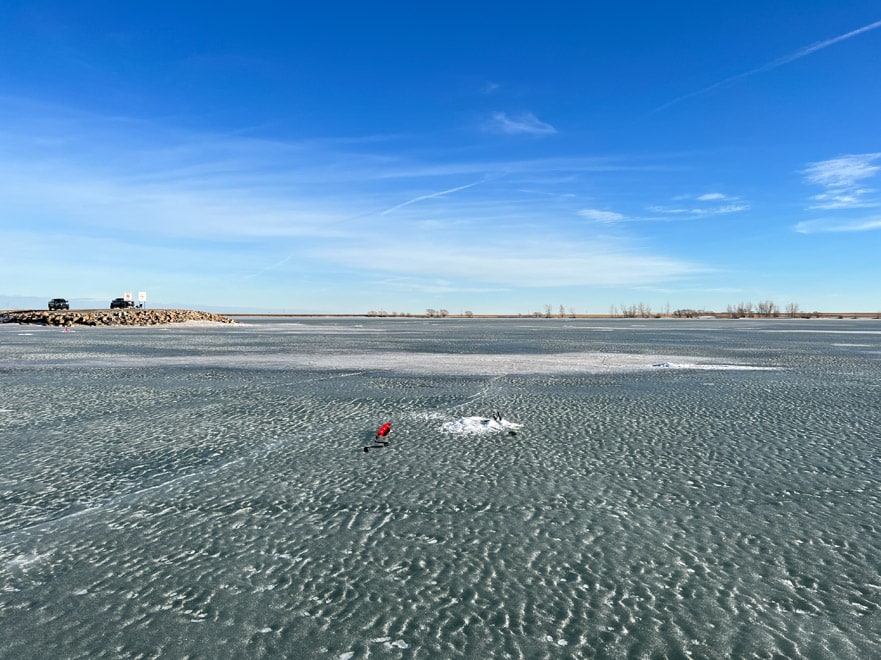
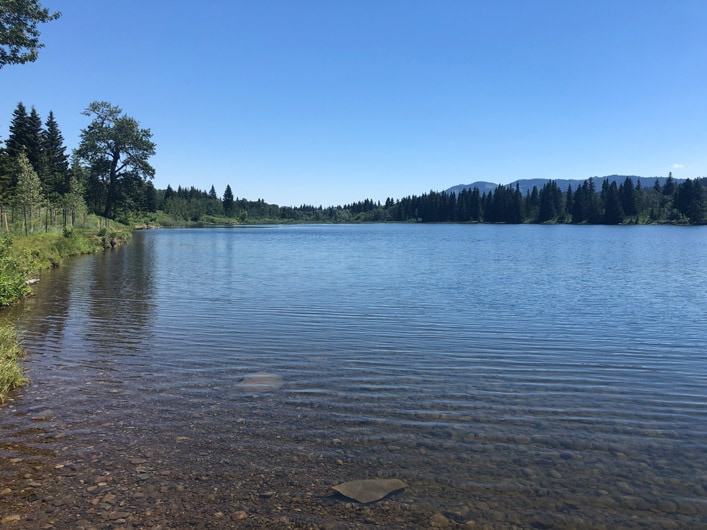
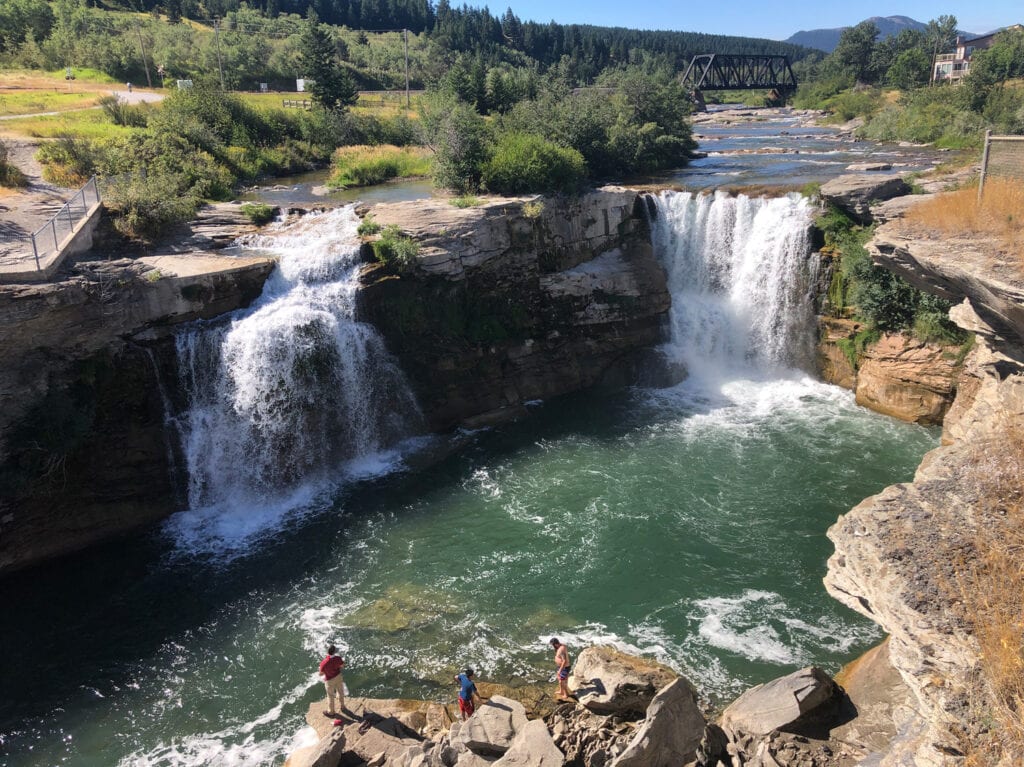
The Bighorn River is a good spot for cutthroat trout fishing, located in the Nordegg area west of Red Deer in Central Alberta.
Most people fish around the Crescent Falls area, as other spots can be difficult to access due to steep banks and fast-moving water.
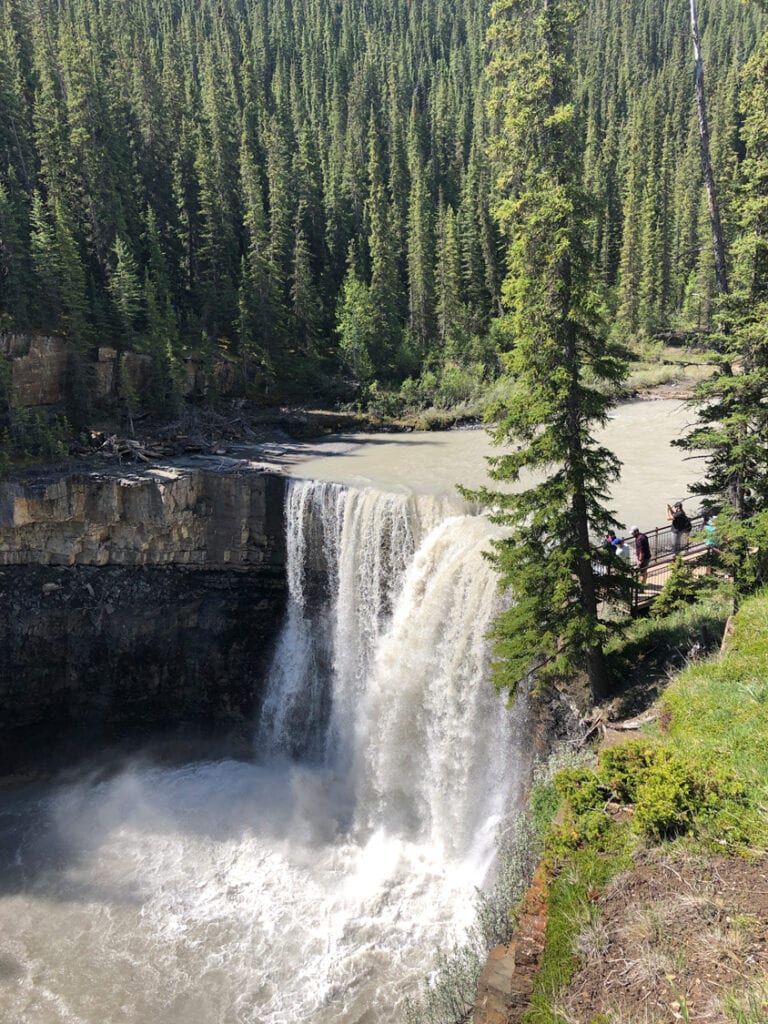

The Bighorn River is the kind of Alberta trout stream that looks almost too good when you first see it.
Cold mountain water.
Rocky runs.
Deep pools.
Clear pockets behind boulders.
Forest on both banks.
And Crescent Falls dropping into one of the most dramatic river canyons in the Nordegg area.
Then you start fishing.
That is when you discover the Bighorn is not necessarily an easy river.
The water can remain high and cold well into the fishing season.
Access can be difficult away from established areas.
Some sections are bordered by steep canyon terrain.
The river changes considerably above and below Crescent Falls.
And because the water can be clear, trout may see you long before you see them.
For anglers willing to walk, read the water and fish carefully, however, the Bighorn River offers one of the more interesting cutthroat trout opportunities in west central Alberta.
It is especially worth knowing if you are looking for fly fishing near Nordegg, cutthroat trout fishing west of Red Deer, or another river to explore along the David Thompson Highway.
Where Is the Bighorn River in Alberta?
The Bighorn River is located west of Nordegg in Clearwater County.
It eventually flows into the North Saskatchewan River.
One of its most recognizable features is Crescent Falls, where the river drops through a dramatic two tier waterfall before continuing into Bighorn Canyon.
Crescent Falls Provincial Recreation Area is located approximately 22 kilometres west of Nordegg on Highway 11 and another 6 kilometres north along the access road. Alberta Parks lists fishing among the recreational activities available at the site.
For somebody unfamiliar with the area, Crescent Falls is the obvious landmark for understanding the river.
But it is important to understand that the falls divide two very different sections of water.
The Bighorn River Above and Below Crescent Falls Are Different Fisheries
This is probably the single most useful thing to know before planning a Bighorn River fishing trip.
Think of the falls as a dividing line.
Above Crescent Falls, the river is smaller and strongly associated with cutthroat trout.
Below the falls, the system becomes more varied and eventually connects with the North Saskatchewan River.
Historical Alberta fishing material describes the upper river as predominantly cutthroat water, while the lower section has supported a broader mix including cutthroat trout, bull trout, mountain whitefish and brown trout.
Current public catch logs also continue to show both cutthroat trout and brown trout from the Bighorn River. Those reports are useful as evidence that anglers are encountering both species, but they should not be treated as a scientific population survey.
If your goal is specifically Bighorn River cutthroat trout, I would concentrate much of my attention on the upper river.
Are Cutthroat Trout Native to the Bighorn River?
This is one of the more interesting facts about the fishery.
Cutthroat trout in the Bighorn River are not part of the native Westslope Cutthroat Trout range in Alberta.
The Bighorn is within the North Saskatchewan River drainage.
Alberta identifies native Westslope Cutthroat Trout primarily with the Bow and Oldman watersheds. The province also notes that cutthroat trout have been introduced into several North Saskatchewan tributaries.
Federal species information specifically records introduced cutthroat populations in the Bighorn River.
That distinction matters.
The cutthroat fishing can still be excellent.
But these fish should not be confused with the threatened native Westslope Cutthroat Trout populations of southern Alberta.
What Fish Are in the Bighorn River?
The fish you are most likely to hear anglers talk about are:
- Cutthroat trout
- Brown trout
- Bull trout
- Mountain whitefish
The exact mix changes depending on the section.
Cutthroat trout are the main attraction in the upper river.
Mountain whitefish are associated with the lower section in current Alberta fishery management information.
Bull trout are native to mountain headwater systems throughout Alberta and prefer cold water, pools and slower holding areas rather than spending all their time in fast riffles.
Brown trout also appear in current community catch records from the Bighorn.
I would not assume that all four species occur in equal numbers throughout the river.
They do not.
Is the Bighorn River Good for Cutthroat Trout?
Yes.
Cutthroat trout are the fish most closely associated with Bighorn River fishing above Crescent Falls.
The river has the ingredients you would expect from good cutthroat water.
Cold water.
Rock.
Pocket water.
Pools.
Current seams.
Undercut banks.
Terrestrial insects.
Aquatic insect life.
And enough broken water to create many individual feeding positions.
But finding cutthroat is not the same as simply walking to the river and casting anywhere.
The Bighorn rewards anglers who recognize small pieces of good habitat.
Is Bighorn River Fishing Easy?
I would describe it as approachable but not easy.
The river is not enormous.
You usually do not need extremely long fly casts.
Many productive places can be reached with relatively modest equipment.
But the fish can be scattered.
Water conditions can make fishing difficult.
Access becomes challenging in places.
And clear water can punish careless approaches.
A beginner can absolutely catch fish here.
A beginner who simply stands at one pool for three hours may have a frustrating trip.
What Are Recent Anglers Saying About Fishing Around Nordegg?
Recent 2026 angler discussions continue to point toward the Nordegg area for anglers looking for Alberta trout streams.
One June discussion specifically recommended fishing upstream around Crescent Falls for cutthroat trout and described the nearby mountain streams as more appealing fly fishing options than the silty North Saskatchewan River during difficult early summer conditions.
Other 2026 Alberta fly fishing discussions repeatedly identify the Nordegg direction as one of the areas worth driving toward when looking for moving water and trout west of Edmonton.
The theme is consistent.
If you are willing to drive west and explore rather than expecting an urban fishery, the Nordegg region gives you considerably more traditional trout water.
Crescent Falls Is the Obvious Starting Point
If you have never visited the Bighorn River, Crescent Falls is the easiest location to understand.
There is an established provincial recreation area.
There is camping.
There are trails.
There is river access upstream from the falls.
There are obvious landmarks.
And you can spend an entire day exploring the general area without needing to invent an obscure access route.
Alberta Parks currently lists 29 camping sites at Crescent Falls Provincial Recreation Area, with a mixture of reservable and first come camping options.
For a fishing weekend near Nordegg, that makes Crescent Falls a practical base.
Do Not Try to Fish Directly Below Crescent Falls
This is an important update to older Bighorn River fishing information.
The area has changed.
Alberta Parks now manages the cliff sides and the area below the waterfalls as a special protection zone.
Access below the waterfalls is prohibited.
Alberta Parks also warns visitors not to wade or swim in the river above or below the waterfalls because of cold fast water and powerful undertow.
Older online fishing stories sometimes describe accessing water that visitors should no longer enter.
Do not use old trip reports as your access guide.
Follow current signs and designated trails.
There is plenty of river to explore without putting yourself in the waterfall hazard area.
Crescent Falls Has Changed Since Older Fishing Reports
This is another reason older online information can be misleading.
The recreation area underwent significant upgrades.
New viewing infrastructure and access improvements were completed following the extended construction closure, and current visitor information again shows the campground operating.
Recent tourism information also describes new viewing platforms and improved trail access around the falls.
So if you remember Crescent Falls from many years ago, do not assume access looks exactly the same.
Where Should You Fish Instead?
If I were visiting for the first time, I would focus on legal and safe access to the river upstream from Crescent Falls.
Then I would walk.
The river naturally creates a sequence of:
Pools.
Runs.
Pocket water.
Boulders.
Current seams.
Gravel.
Cut banks.
Slower edges.
Those features are where your attention should go.
You do not need a secret fishing coordinate.
You need to recognize good trout water.
The Upper River Is Smaller Than Many People Expect
That can be an advantage.
A huge river gives fish thousands of possible locations.
On a smaller mountain river, good holding water becomes easier to identify.
One deep pool may hold several trout.
One large boulder might create the best pocket in a fifty metre stretch.
One undercut bank may contain the largest fish you see all day.
The challenge is fishing those places without frightening the fish first.
Approach the River Carefully
Clear mountain streams punish noisy anglers.
Do not walk directly to the deepest pool and stand on top of it.
Stop farther back.
Look.
Use polarized glasses.
Check the near bank.
Check beneath trees.
Look for moving shadows.
Then make your first cast.
Your first presentation into an undisturbed pool is often the best opportunity you get.
Fish the Near Water First
This is one of the easiest Bighorn River mistakes to avoid.
You reach the river.
The opposite bank looks beautiful.
You immediately make your longest cast.
Meanwhile, a cutthroat may have been sitting in the slow water three metres from your boots.
Start close.
Then expand outward.
This also helps prevent your line from crossing over fish you have not yet disturbed.
Deep Pools Are Obvious Targets
Mountain trout need places where they can rest.
A deeper pool provides slower current and security.
But do not treat the entire pool as one fishing spot.
Break it apart.
Fish the Head
The head of the pool is where faster current enters deeper water.
Food arriving from upstream is concentrated there.
Trout can sit just inside the deeper water and feed efficiently.
This is often one of the first places I cast.
Fish the Middle
The deepest portion can hold fish, especially under bright conditions.
Get the fly or lure deep enough.
A beautiful dry fly drifting two feet above a trout sitting near bottom might never get noticed.
Fish the Tail
The tail is where the pool becomes shallower again.
Do not walk through it before fishing.
Cutthroat may sit surprisingly close to the transition.
Pocket Water Is Perfect for Cutthroat Fishing
A boulder breaks the current.
Behind it is a small soft spot.
Beside it is another.
Between two rocks is a narrow feeding lane.
Those tiny pieces of water are easy to ignore.
They can also hold fish.
The advantage is that they are quick to fish.
Make several accurate presentations.
Nothing happens?
Move to the next pocket.
A day on the Bighorn should involve a lot of movement.
Look for Current Seams
A current seam is where fast water meets slow water.
It may appear as a narrow line on the surface.
A trout can sit in the easier water while watching food travel past in the faster lane.
That allows the fish to feed without constantly fighting the strongest current.
Fish the boundary.
This is useful whether you are casting a dry fly, drifting a nymph or retrieving a small spinner.
Undercut Banks Deserve a Cast
Outside bends can develop deeper water beneath the bank.
Tree roots and vegetation add cover.
Shade makes the area even more attractive.
Approach carefully.
A good trout may be sitting directly underneath the bank rather than in the middle of the river.
Cast upstream and allow the presentation to travel naturally beside the cover.
What Is the Best Time to Fish the Bighorn River?
The exact timing changes every year because mountain rivers respond strongly to snowmelt, rain and temperature.
Historically, anglers familiar with the Bighorn have often found the river improves once early summer runoff settles.
One longtime Alberta fishing account describes the Bighorn as tending to remain colder, higher and more discoloured longer than some nearby streams, with more dependable fishing later in summer.
That fits the geography.
Mountain water takes time to settle.
A calendar date by itself is less useful than looking at the actual river.
Why Can Early Summer Be Difficult?
Snow is still melting in the mountains.
Rain can add more water.
The river becomes faster.
Visibility declines.
Crossings become more dangerous.
Pools change.
Fish may hold in completely different places.
A river that looks easy in late summer can become a powerful mountain stream during runoff.
Do not assume that because fishing season has started the river will immediately be in perfect condition.
What Does Good Bighorn River Water Look Like?
I want enough flow to keep the river alive.
But I also want enough clarity to identify structure.
I want to see:
Boulders.
Dark pools.
Seams.
Gravel.
Current breaks.
Shoreline cover.
Slightly coloured water is not automatically bad.
Crystal clear water can actually make trout more cautious.
The ideal day is not always the day when you can see every rock from one hundred metres away.
Does Rain Ruin Bighorn River Fishing?
Not necessarily.
A small amount of rain can improve fishing.
Cloud cover reduces light.
Insects may become active.
Trout may feel safer leaving cover.
But a major mountain storm can quickly affect a small river.
If the Bighorn rises dramatically and turns heavily discoloured, fishing becomes much more difficult and wading becomes more dangerous.
The important question is not:
Did it rain?
It is:
What did that rain do to the river?
Is the Bighorn River Good for Fly Fishing?
Yes.
Fly fishing is probably the style most naturally associated with the upper Bighorn.
A typical four or five weight trout rod is enough for most general fishing.
Older Alberta Bighorn fishing accounts recommend lighter rods on the smaller upper river and slightly heavier setups farther downstream.
You do not need a huge western river setup.
Accuracy and presentation matter much more than throwing enormous amounts of line.
What Flies Work on the Bighorn River?
There is no single Bighorn River fly that works all season.
I would build a small box around several categories.
Dry Flies
Cutthroat trout have a reputation for being willing surface feeders when conditions are right.
Useful dry patterns include:
- Elk hair caddis style flies
- Adams style flies
- Small mayfly patterns
- Ant patterns
- Beetle patterns
- Hopper patterns later in summer
- General attractor dries
You do not always need to perfectly identify the insect.
A well presented general dry can catch fish when trout are looking upward.
Terrestrial Fishing Can Be Excellent
The river runs through forest and mountain vegetation.
That means insects fall into the water.
Ants.
Beetles.
Grasshoppers.
Other terrestrial insects.
Later summer is especially interesting because terrestrial food can become an important part of the menu.
A foam ant drifting through a quiet pocket can be surprisingly effective.
So can a modest hopper when larger insects are present.
Nymphs Are More Reliable When Fish Are Not Rising
This is where many anglers save a slow day.
You arrive expecting perfect dry fly fishing.
Nothing rises.
You stubbornly keep throwing a dry for three hours.
Instead, go underneath.
A historical Bighorn River fishing account describes bead head pheasant tail and prince style nymphs outperforming dry fly presentations on a difficult trip.
That does not make those two patterns magical.
It illustrates the bigger lesson.
If the fish are feeding below the surface, meet them there.
Useful Nymph Styles
I would carry:
- Pheasant tail style nymphs
- Prince style nymphs
- Hare ear style nymphs
- Caddis larva patterns
- Small stonefly patterns
- General dark bead head nymphs
Depth usually matters more than changing between six shades of brown.
Get the Nymph Deep Enough
The river looks shallow.
Your fly still may not be reaching the fish.
Current pulls the leader upward.
A trout sits near bottom behind a rock.
Your nymph passes over its head every cast.
Add enough weight to reach the feeding lane.
You do not need to drag continuously across the bottom.
But occasional bottom contact tells you that you are actually reaching productive depth.
Dry Dropper Fishing Makes Sense Here
A dry fly with a nymph suspended below it is an excellent mountain river setup.
The dry gives you a surface opportunity.
It also acts as an indicator for the nymph.
This works especially well in pocket water where you are repeatedly making short drifts.
Adjust the nymph depth as pools become deeper.
Do not leave the same distance between flies all day if the river changes constantly.
Can You Use Streamers on the Bighorn River?
Yes.
They become particularly interesting when searching deeper water or targeting larger predatory trout.
A small streamer can imitate:
A minnow.
A juvenile fish.
A leech.
Another substantial meal.
I would especially consider streamers in deeper lower river water where larger fish species may be present.
Bull Trout Change the Streamer Game
Bull trout are predators.
Alberta says they feed heavily on other fish, particularly mountain whitefish.
If you deliberately explore deeper lower river habitat where bull trout may occur, larger fish imitations make much more sense than tiny dries.
Think deep pools.
Slow edges.
Large current breaks.
Places where a predator can rest and intercept prey.
Is Spin Fishing Good on the Bighorn River?
Yes.
You do not need a fly rod to catch trout here.
A light spinning setup can work extremely well.
For somebody who already fishes Alberta trout ponds or small rivers with spinning gear, the Bighorn is completely approachable.
The biggest adjustment is presentation.
Do not fish it like a pike lake.
Best Lures for the Bighorn River
I would keep the selection small.
- Small inline spinners
- Small spoons
- Tiny minnow crankbaits
- Small soft plastic minnows
- Light jigs
The fish and river are generally better suited to compact presentations.
You want something that fits naturally into small pools and pocket water.
Small Inline Spinners Are the Easiest Starting Point
A small spinner is probably what I would give a new spin angler.
Cast slightly upstream.
Let the lure settle.
Begin retrieving fast enough to activate the blade.
Allow current to bring it through the seam or pool.
Do not simply throw downstream and reel as quickly as possible.
Use the current.
Silver or Gold?
Both.
Silver is an easy starting point in clear conditions.
Gold can be useful when light levels drop or the water carries more colour.
I would also carry one darker pattern.
But I would not bring twenty colours.
A properly presented silver spinner in good water is more useful than the perfect colour in empty water.
Small Spoons Help With Larger Pools
A spoon gives you additional casting distance.
It can also be allowed to sink deeper.
That makes it useful where the Bighorn widens or where you want to reach the far edge of a pool.
Keep it moving above the rocks.
The river has no shortage of places to lose a lure.
Small Minnow Lures Can Find Better Fish
Trout become increasingly predatory as they grow.
A small minnow shaped crankbait or soft plastic can be excellent around deeper pools and undercut banks.
Do not make it enormous.
A compact baitfish profile is enough.
Let the lure move through the holding water rather than racing through it.
Do You Need Waders?
Not necessarily.
There is fishable water accessible from shore in some areas.
And near Crescent Falls, Alberta Parks explicitly warns against wading around the waterfall areas because the Bighorn is cold, fast and dangerous.
Farther upstream, experienced anglers may choose to wade where conditions are suitable.
But never assume a mountain river is safe because it looks shallow.
Current is deceptive.
Rocks are slippery.
Depth changes suddenly.
Sometimes the best decision is simply fishing from the bank.
The River Is Colder Than It Looks
This matters from a safety perspective.
Alberta Parks describes the Bighorn around Crescent Falls as fast flowing cold mountain water and specifically warns that the river can sweep people from their feet.
A fall into a mountain river is not the same as stepping into a warm shallow lake.
Bring proper footwear.
Use caution around steep banks.
Do not climb into closed canyon areas.
Fish another pool if access looks dangerous.
No trout is worth a rescue.
There Is No Cell Service at Crescent Falls
This is another detail worth knowing before a fishing trip.
Alberta Parks currently warns that there is no cell phone service anywhere in Crescent Falls Provincial Recreation Area.
Download anything you need before leaving service.
Maps.
Weather information.
Fishing information.
Emergency contacts.
Tell somebody where you are going if you plan to walk away from developed areas.
This is mountain country, even though Highway 11 makes it relatively easy to reach.
Bring Bear Spray
The Nordegg region is wildlife country.
You may encounter black bears or grizzly bears.
Carry bear spray where you can actually reach it.
Do not bury it underneath your fly boxes.
Make noise when moving through thick vegetation.
Be particularly aware around loud water where animals may not hear you approaching.
Fishing encourages people to move quietly.
That is excellent for trout and sometimes less ideal around large wildlife.
Polarized Sunglasses Are Extremely Useful
If there is one piece of equipment beyond the rod that I really want on the Bighorn, it is polarized glasses.
They help you see:
Trout.
Deep channels.
Submerged rocks.
Current seams.
Drop offs.
Safer places to step.
They are both a fishing tool and a safety tool.
On clear mountain water, that matters.
Do Not Spend the Entire Day at Crescent Falls
This is one of the biggest mindset changes I would recommend.
Crescent Falls is spectacular.
It is also the obvious attraction.
People stop there.
Camp there.
Hike there.
Take photos there.
The Bighorn River is larger than the viewpoint.
If you are serious about fishing, treat the falls as your orientation point rather than the only place worth exploring.
Look at maps.
Study public access.
Walk where appropriate.
Fish away from crowds.
Do Not Ignore Small Water
Some anglers search for the biggest pool because they assume the biggest fish must live there.
Cutthroat can occupy surprisingly small pockets.
A section behind one boulder may be enough.
A narrow trough beside the bank may hold a fish.
A tiny current break can provide everything a trout needs.
Fish carefully before walking through those spots.
The First Fish Should Change How You Fish
You catch a cutthroat behind a boulder.
Stop.
What was different?
Was the water deeper?
Slower?
Shaded?
Did a seam run beside it?
Was the fish at the head of the pool?
What did it eat?
How deep was the presentation?
Now find another piece of water with the same characteristics.
That is how you turn one lucky trout into a pattern.
What If You Are Not Catching Anything?
Do not immediately change flies.
First ask whether you are around fish.
Then ask whether your presentation is at the correct depth.
Then think about approach.
Common Bighorn River problems include:
- Fishing empty shallow water
- Standing too close before casting
- Moving too loudly
- Fishing only dry flies when nothing is rising
- Fishing nymphs too high
- Using oversized spinning lures
- Staying at one pool too long
- Visiting during difficult river conditions
Fix those before buying another fly box.
Keep Moving
This is one of the most important pieces of advice for small Alberta trout rivers.
Fish the pool properly.
Nothing?
Move.
Fish the next run.
Next pocket.
Next bend.
Eventually the river starts showing you what fish are using that day.
Staying in one beautiful but empty pool for three hours teaches you very little.
Is the Bighorn River Good for Beginners?
Yes, with realistic expectations.
The upper Bighorn is manageable in size.
You do not need huge casts.
There are obvious pools and pockets.
Cutthroat can be willing feeders.
But the remote setting and difficult access in places mean I would not treat it like a beginner stocked pond.
A new angler should begin close to established public access.
Stay away from hazardous canyon areas.
Learn to read the water.
Keep the tackle simple.
What Rod Should You Bring?
For fly fishing, a four or five weight rod is a practical general choice.
For spinning, a light or medium light rod gives you plenty of control.
You do not need heavy gear for ordinary upper river cutthroat.
If you are specifically exploring lower river water for larger predators such as bull trout, the equipment may need to become heavier.
Match the rod to the fish you are actually targeting.
Can You Camp and Fish at Crescent Falls?
Yes.
The current Alberta Parks campground sits along the Bighorn River and lists fishing among its activities.
That makes this one of the more convenient ways to turn a Bighorn River fishing trip into a weekend.
Fish early.
Return to camp.
Explore the region during the afternoon.
Fish again later.
You also have quick access to many other outdoor destinations along the David Thompson Highway.
Is Crescent Falls Campground Open in 2026?
Yes.
The campground listing is active in 2026 following the earlier construction closure, and Alberta Parks currently shows camping availability and operating information.
Older articles stating that Crescent Falls is closed may therefore be outdated.
Always check Alberta Parks immediately before travelling because temporary advisories can still happen.
Is the Road to Crescent Falls Paved?
The final access is not simply another section of Highway 11.
Travel Alberta describes Crescent Falls as 22 kilometres west of Nordegg on Highway 11 followed by approximately 6 kilometres on a gravel access road.
Alberta Parks also cautions that campground access includes a steep hill and recommends extra care with trailers.
For a normal fishing day trip, this is much easier access than true backcountry fishing.
It is still not an urban parking lot.
Is There Cell Service?
Do not count on it.
Alberta Parks states there is no cell service in the recreation area.
Plan your trip before you arrive.
That includes having any maps or fishing information available offline.
Are There Bull Trout in the Bighorn River?
Bull trout have historically been documented in the lower Bighorn system, and they are native to Alberta mountain headwaters generally.
They are not the fish I would expect to dominate an ordinary upper river cutthroat trip.
If you encounter a trout with pale spots and no black markings on the dorsal fin, look carefully before assuming it is something else.
Correct fish identification matters on Alberta mountain streams.
Are There Brown Trout in the Bighorn River?
Current public catch logs include brown trout from the Bighorn River alongside cutthroat trout.
Historical angler descriptions also place brown trout in the lower river.
I would consider them a possible lower river catch rather than the main reason to choose the Bighorn.
If brown trout are your only target, there are other Alberta rivers where they are much more central to the fishery.
Are There Mountain Whitefish?
Yes, particularly in the lower river.
Current Alberta management information specifically recognizes mountain whitefish in the Bighorn River downstream of Crescent Falls.
If you are catching whitefish, try small nymphs close to the bottom.
They often feed very differently from aggressive cutthroat taking dry flies.
Is the Bighorn River Better Than the Ram River?
That depends on what you want.
The Ram system has a much larger reputation among Alberta fly anglers.
The Bighorn is smaller, less famous and convenient for people already exploring the Nordegg and Crescent Falls area.
I would not drive to the Bighorn expecting it to replace every other east slopes trout river.
I would visit because it is its own fishery.
It gives you cutthroat water in a spectacular part of west central Alberta and can be combined easily with a larger Nordegg trip.
Is the Bighorn River Worth the Drive From Edmonton?
If you are looking specifically for trout streams, the Nordegg region is one of the directions Edmonton anglers repeatedly consider.
Recent Alberta discussions about fly fishing near Edmonton commonly point anglers west and southwest toward areas such as Nordegg because traditional trout streams become much more available once you reach the foothills.
The Bighorn makes the most sense as part of a full day or weekend rather than a quick after work fishing trip.
Is It Worth Fishing if You Are Staying in Nordegg?
Definitely.
This is probably the easiest decision.
If you are already staying in Nordegg and you enjoy trout fishing, bring the rod.
Crescent Falls is one of the major nearby attractions, and the Bighorn gives you a legitimate stream fishing option without turning the day into another long road trip.
Even if the fishing is slow, the scenery makes the river worth exploring.
My Simple Bighorn River Fly Box
If I wanted to keep it small, I would carry:
- Adams style dry flies
- Elk hair caddis style flies
- Foam ants
- Small hopper patterns
- Pheasant tail style nymphs
- Prince style nymphs
- Hare ear style nymphs
- Small stonefly nymphs
- Woolly bugger style flies
- A few small streamers
That gives me options for the surface, subsurface water and deeper pools.
My Simple Bighorn River Spinning Box
I would carry:
- Several small silver spinners
- Several small gold spinners
- A couple of small spoons
- Small minnow crankbaits
- Two inch soft plastic minnows
- Light jig heads
That is enough.
This river is much more about finding and approaching trout correctly than owning a huge tackle collection.
What I Would Do on My First Bighorn River Trip
I would start by visiting Crescent Falls and understanding the area.
I would look at the river from safe public access.
Then I would focus upstream.
I would put on polarized glasses and walk until I found obvious trout habitat.
A deep pool.
A boulder field.
A shaded bend.
Pocket water.
I would begin with a dry fly if fish were visibly rising.
If nothing showed on the surface, I would switch quickly to a nymph.
With spinning tackle, I would start with a small silver or gold spinner.
I would fish each good section thoroughly but not endlessly.
Then I would keep walking.
What I Would Not Do
I would not climb into the restricted canyon below Crescent Falls.
I would not wade close to the waterfalls.
I would not rely on an old fishing blog for current access.
I would not expect the river to be perfect simply because it is summer.
I would not fish one pool all day.
And I would not assume every trout with pale spots is a cutthroat.
The Bighorn is remote enough that preparation matters.
Check Conditions Before You Leave Nordegg
Mountain weather changes.
River levels change.
Road conditions change.
Park advisories change.
Bring what you need before leaving reliable service.
It is also worth checking the current Alberta fishing information for the Bighorn before every trip.
The river has separate management above and below Crescent Falls, so an old screenshot or article is not a good substitute for current information.
The 2026 Alberta fishing guide is effective from April 1, 2026 through March 31, 2027, and Alberta explicitly recommends checking current water specific information before heading into areas without cell service.
Bighorn River Fishing Questions
Is the Bighorn River near Nordegg good for fishing?
Yes. It is best known as a cutthroat trout stream, particularly above Crescent Falls. It is better suited to anglers who enjoy walking and exploring than anglers expecting one easy roadside fishing hole.
What fish are in the Bighorn River Alberta?
Cutthroat trout are the main target in the upper river. Lower river records and historical fishery information also include mountain whitefish, bull trout and brown trout.
Can you fish at Crescent Falls?
Fishing is available within the Crescent Falls recreation area, but the area directly below the waterfalls is currently closed to access. Alberta Parks also warns visitors not to wade around the waterfalls because of dangerous cold swift water.
Where should I fish near Crescent Falls?
For a first visit, concentrate on safely accessible water upstream from the falls and explore pools, runs, boulders and current seams rather than attempting to enter the canyon below the waterfalls.
What is the best fly for the Bighorn River?
There is no single best fly. General dry flies, caddis patterns, terrestrials, pheasant tail style nymphs and prince style nymphs are all useful choices. Nymphs are particularly important when fish are not visibly feeding on the surface.
Are dry flies good on the Bighorn River?
Yes, especially for cutthroat under suitable conditions. If nothing is rising, however, do not spend the entire day forcing dry fly fishing. Switch to nymphs and reach deeper holding water.
Can I use a spinning rod on the Bighorn River?
Yes. A light spinning rod with small inline spinners, spoons and compact minnow lures is perfectly suitable for Bighorn River trout fishing.
What colour spinner should I use?
Silver and gold are both good starting points. Presentation and location matter more than carrying a large collection of colours.
Is the Bighorn River good for beginner fly anglers?
It can be. The river is smaller than many major Alberta trout rivers and does not require extremely long casts. Beginners should stay near safe public access, avoid hazardous canyon areas and expect to walk between productive pools.
When does the Bighorn River usually fish best?
Conditions vary with snowmelt and rainfall, but the river has historically tended to remain cold, high and coloured later than some nearby streams. Later summer can offer easier conditions once runoff has settled.
Is there cell service at Crescent Falls?
Alberta Parks currently says there is no cell service in the recreation area.
Can you camp beside the Bighorn River?
Crescent Falls Provincial Recreation Area has a campground beside the river and currently lists both camping and fishing as available activities.
Is the Bighorn River stocked?
The cutthroat population has an introduced history in the North Saskatchewan drainage. Federal species information specifically documents cutthroat introductions into the Bighorn River.
That does not mean anglers should think of the river like a regularly stocked put and take trout pond.
It functions as a stream fishery.
Are there big trout in the Bighorn River?
Larger fish are possible, particularly in deeper lower river habitat, but I would not choose the Bighorn because I expected trophy trout on every trip.
The upper river is better approached as a cutthroat stream where scenery, dry fly opportunities and exploring pocket water are major parts of the experience.
Why the Bighorn Is Worth Learning
The Bighorn River is not Alberta’s most famous trout river.
That is part of its appeal.
You can camp beside the river.
Wake up near Crescent Falls.
Walk upstream through mountain forest.
Fish a small dry into pocket water.
Find cutthroat in places most visitors walk straight past.
And if the fishing is slow, you are still standing in one of the most impressive river valleys around Nordegg.
The mistake is treating Crescent Falls as the fishing spot.
It is better to think of Crescent Falls as the landmark that introduces you to the river.
Stay away from the hazardous waterfall zone.
Go upstream.
Look for pools.
Look for boulders.
Watch the seams.
Keep moving.
The farther you get from the parking area mindset, the more the Bighorn starts making sense as a trout river.