You catch a trout in an Alberta river.
It has pale spots.
The fins look light along the edges.
It does not look like the rainbow trout you normally catch.
Now you have a problem.
Is it a bull trout?
A lake trout?
Maybe a brook trout?
This is not just an identification question.
It can be a legal question.
Bull trout have a zero possession limit everywhere in Alberta.
Every bull trout you catch must be released.
That makes knowing what is on the end of your line considerably more important than simply being able to tell your friends what you caught.
And the confusion is real.
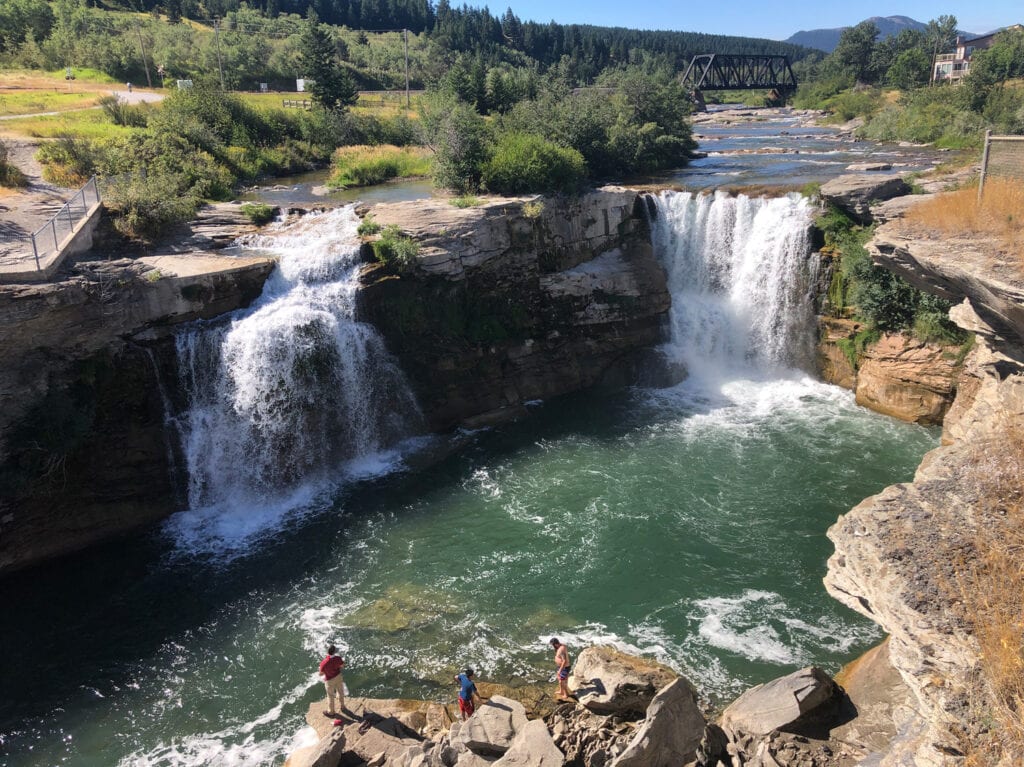
In August 2026, an Alberta angler posted a fish caught in the Crowsnest River and wondered whether it was a bull trout. Other anglers identified it as a lake trout, with the deeply forked tail being one of the strongest clues.
That is a perfect example of why you should never identify a trout based only on where you caught it.
Learn the fish itself.
The First Rule Is Easy to Remember
Alberta has used a simple slogan for bull trout identification:
No black, put it back.
Bull trout do not have black spots or black markings on the dorsal fin.
The dorsal fin is the main fin standing upright on the fish’s back.
If you are holding what might be a bull trout and there are no black spots on that dorsal fin, you need to be very careful.
That alone does not prove the fish is a bull trout.
Lake trout also have pale markings rather than the obvious black spotting seen on species such as rainbow trout.
Brook trout can also create confusion because they belong to the same general group of fish known as char.
So the absence of black spots should be treated as a warning to slow down and identify the fish properly.
Bull Trout Are Actually Char
Despite the name, bull trout are not true trout.
They are char.
So are lake trout and brook trout.
That relationship explains why these fish can look similar.
Char generally have lighter spots on a darker background.
Compare that with many true trout.
Rainbow trout have dark spots.
Brown trout have dark spots.
Cutthroat trout have dark spots.
With char, the pattern is often reversed.
Think:
Light spots on dark fish.
That simple observation can immediately narrow down what you caught.
How to Identify a Bull Trout
Start with the overall shape.
Bull trout tend to have a long body with a relatively large head.
The head can look noticeably large compared with the rest of the fish.
The back is generally olive, grey or greenish.
The sides can appear silvery.
Along the body you should see pale yellow, orange or reddish spots.
The most important feature remains the dorsal fin.
There should be no black spots on it.
Look at several features together rather than relying on colour alone.
A bull trout may look considerably different depending on its age, size, waterbody and time of year.
Do Not Identify Bull Trout by Colour Alone
This is one of the easiest mistakes to make.
People expect a bull trout to look dramatic.
Orange belly.
Bright spots.
Huge head.
Beautiful spawning colours.
Then they catch a smaller silver fish and assume it cannot possibly be a bull trout.
Young fish can be much less obvious.
Water conditions also affect appearance.
Lighting changes colour.
A fish photographed underwater can look completely different from the same fish held in daylight.
Focus on physical characteristics.
Spots.
Fins.
Tail shape.
Head shape.
Do not rely entirely on whether the fish looks colourful enough.
Bull Trout Have Pale Spots
The spots on a bull trout are generally pale yellow through reddish colours against a darker body.
You are not looking for the black spotting common on rainbow trout.
This becomes particularly helpful when comparing bull trout with brown trout.
Brown trout can have both dark and reddish spots.
Bull trout do not have that same pattern of large black spotting.
If the fish is covered in obvious black spots, you are probably looking at something other than a bull trout.
The Dorsal Fin Is Your Emergency Check
If you have only a few seconds to inspect the fish before releasing it, look at the dorsal fin.
Black spots or dark markings?
That argues against bull trout.
No black spots?
Now treat the fish cautiously until you know exactly what it is.
This is where the Alberta slogan becomes useful.
No black, put it back.
It is intentionally simple.
The goal is preventing an angler from accidentally killing a protected bull trout because they mistook it for another species.
How to Identify a Lake Trout
Lake trout can create real confusion because they are also char.
Their bodies are usually grey, sometimes becoming darker depending on the fish and water.
They have irregular pale or white spots.
The easiest feature for many anglers is the tail.
Lake trout have a strongly forked tail.
That fork can be very obvious.
If you are deciding between a bull trout and lake trout, look at the tail early.
A deep fork strongly suggests lake trout.
The Tail Can Solve the Mystery
Imagine two fish with pale spots.
Both appear grey.
Neither has the familiar black spotting of a rainbow trout.
One has a noticeably deep V shaped tail.
That is a major clue.
You are probably looking at a lake trout.
The tail of a bull trout is much less deeply forked.
This is why photographs showing the entire fish are so much more useful for identification than close photographs showing only the head.
When taking an identification picture, include the tail.
Lake Trout Can Have Pale Orange Fins
During the fall spawning season, lake trout can develop pale orange colouring on fins near the tail.
That can create even more confusion with other char.
Again, do not rely entirely on colour.
Look at the combination.
Grey body.
Irregular pale spots.
Strongly forked tail.
Those features point toward lake trout.
But I Caught It in a River
This is where anglers can talk themselves into the wrong identification.
The fish came from a river.
Therefore it cannot be a lake trout.
That assumption is dangerous.
Lake trout are primarily associated with cold lakes, but they can also be encountered in river systems.
A recent Crowsnest River catch is a perfect example.
The angler initially considered bull trout as a possibility partly because of the location and appearance.
The tail helped identify the fish as a lake trout.
Never let the waterbody completely override what the fish looks like.
Check What Species Actually Live There
Location is still useful.
It just should not be your only evidence.
Before fishing unfamiliar water, check which species are known to occur there.
If the water contains bull trout and lake trout, you already know you need to recognize both.
If brook trout are present as well, identification becomes even more important.
Knowing the possible species before the first cast makes everything easier when a fish is eventually in your net.
Brook Trout Cause Another Identification Problem
Brook trout are also char.
They can have pale spots.
Their lower fins have pale leading edges.
That can make smaller brook trout and bull trout confusing to someone who has never handled either species.
Fortunately, brook trout have some excellent identifying features.
Look for the Red Spots With Blue Halos
Brook trout are among Alberta’s most colourful fish.
Their sides commonly have red spots surrounded by blue halos.
That is a very useful feature.
They also have pale wavy markings across the darker back.
The lower fins usually show a pale leading edge followed by a dark stripe.
Once you have seen a good brook trout up close, the pattern becomes fairly distinctive.
Look at the Dorsal Fin on a Brook Trout
Brook trout can have dark markings on the dorsal fin.
Bull trout do not.
That gives the old Alberta rule another purpose.
You have a char with pale spots and light edges on the lower fins.
You are unsure whether it is brook or bull.
Check the dorsal fin.
Black markings support brook trout.
A clean dorsal fin without black spotting makes bull trout a much more serious possibility.
If uncertainty remains, release the fish.
Brook Trout Have a Different Tail Too
Brook trout generally have a slightly forked tail.
Lake trout have a much more deeply forked tail.
Bull trout have a tail that appears much less strongly forked than a lake trout.
Tail shape therefore helps separate all three.
Do not stare only at body colour.
The tail may provide a much clearer answer.
Bull Trout Compared With Lake Trout
Here is the quick comparison.
Bull Trout
- Pale yellow through reddish spots
- Large head
- Long body
- No black spots on dorsal fin
- Tail not deeply forked
- Must be released everywhere in Alberta
Lake Trout
- Grey body
- Irregular pale or white spots
- Deeply forked tail
- Usually associated with cold lakes but can occur in moving water
- Harvest rules depend on the specific waterbody
Brook Trout
- Dark greenish back
- Pale wavy markings
- Red spots often surrounded by blue halos
- Pale leading edge on lower fins with dark stripe behind it
- Dark markings can appear on dorsal fin
- Harvest rules depend on the specific waterbody
What About Brown Trout?
Brown trout are much easier to separate once you know what to look for.
They are generally golden brown.
They have large black spots on the back.
They also have reddish spots on the sides, sometimes surrounded by pale halos.
Alberta describes brown trout as the only trout in the province with both red and black spotting.
If you see obvious large black spots combined with red spots, you are probably looking at a brown trout rather than a bull trout.
What About Rainbow Trout?
Rainbow trout are another relatively easy comparison.
They typically have many black spots over the body.
Adult fish commonly show a pink or reddish stripe running along the side from the gill area toward the tail.
Lake dwelling rainbow trout can appear much more silver than the colourful rainbows people expect from photographs.
But the dark spotting remains important.
Again:
Black spots point you away from bull trout.
What About Cutthroat Trout?
Cutthroat trout have black spots without the pale halos seen around some brown trout spots.
But the famous identifying feature is underneath the jaw.
Look for the red or orange slash in the fold below the mouth.
That is where the cutthroat name comes from.
Do not rely on the slash alone, especially when dealing with possible hybrid fish.
Use the entire appearance.
Black spots.
Jaw marking.
Body shape.
Location.
Hybrid Trout Make Identification Harder
Alberta’s trout identification problem becomes more complicated because trout can hybridize.
Rainbow trout and Westslope cutthroat trout can produce hybrid offspring.
Those fish may show characteristics of both parents.
That means nature does not always provide the perfect textbook fish you saw in an identification chart.
This is another reason the safest answer to genuine uncertainty is release.
You do not need to win an identification argument while the fish is out of water.
What About Tiger Trout?
Tiger trout look completely different once you know the pattern.
They are a sterile hybrid produced from brown trout and brook trout.
Their bodies can have pronounced wandering markings that look almost like the stripes or patterning on a tiger.
Those markings are sometimes described as worm like.
Alberta stocks tiger trout into selected fisheries.
If you encounter one, check the specific waterbody regulations just as you would for any other trout.
Do not assume that because the fish was stocked, harvest is automatically permitted.
Why Bull Trout Identification Matters So Much
Bull trout are Alberta’s official provincial fish.
They are also listed as Threatened under Alberta’s Wildlife Act.
Historical overharvest contributed to population declines.
The species grows relatively slowly and does not begin spawning as early as many other trout.
Those biological characteristics make bull trout particularly vulnerable.
Alberta has therefore maintained a province wide zero possession limit.
There is no Alberta lake or stream where you can legally decide that this particular bull trout is small enough, large enough or abundant enough to keep.
It goes back.
Zero Possession Means Zero
This is worth making completely clear.
The province wide maximum possession limit for bull trout in the 2026 Alberta fishing regulations is zero.
Not one.
Not one if it is accidentally caught.
Not one if it swallowed the hook.
Zero.
Release the fish.
Specific regulations for other trout species can vary substantially between individual waterbodies.
That is why identifying the fish is only the first step.
Once you know the species, you still need to know the regulation.
Lake Trout Rules Are Not Province Wide Harvest Permission
The 2026 Alberta regulations list a province wide maximum possession of three lake trout.
That does not mean you can automatically keep three lake trout anywhere you catch them.
Individual lakes and streams can have stricter rules.
A specific waterbody might have:
- A smaller limit
- A size restriction
- A seasonal closure
- Catch and release requirements
- Other special regulations
Always read the regulation for the exact waterbody.
The province wide maximum is a ceiling, not permission to ignore local rules.
The Same Applies to Brook Trout
The province wide maximum possession table allows up to five brook trout within the combined trout possession rules.
Again, individual waterbody regulations can be more restrictive.
A mountain stream may have completely different harvest rules from a lake containing an introduced brook trout population.
Never identify a brook trout and immediately assume it can go into the cooler.
Identify first.
Check regulations second.
Harvest only when both answers are clear.
Do Not Keep a Fish While You Ask Reddit What It Is
This seems obvious.
It still happens.
Someone catches an unfamiliar trout.
They take photographs.
Put the fish on shore.
Start searching online.
Maybe upload a photograph.
Then wait for answers.
That is not a good identification strategy.
If you cannot confidently identify a fish that might belong to a protected species, release it immediately.
Take a quick photograph if you can do so without delaying release.
You can solve the mystery afterward.
Photograph the Right Features
If you want help identifying an unfamiliar trout later, take a useful photograph.
Try to include:
- Entire side of the fish
- Dorsal fin
- Tail
- Lower fins
- Head
- Spot pattern
A photograph showing only the angler’s hand and the fish’s head may hide the exact features needed to distinguish a bull trout from a lake trout.
Tail shape can be crucial.
So can dorsal fin markings.
Get the whole fish in the photograph.
Then release it.
Keep the Fish Wet
Identification should not turn into a five minute photoshoot.
If the fish must be released, minimize handling.
Wet your hands.
Keep the fish in the water whenever practical.
Have your camera ready before lifting it.
Take the photograph quickly.
Then return the fish.
The identification can happen afterward.
Do Not Put an Unknown Trout on the Ground
A gravel bank may make a convenient background for a photograph.
It is terrible for the fish.
Dry surfaces can damage the protective slime coating.
Rocks can cause physical injury.
If you think the fish may be a bull trout or another fish that must be released, handle it as though successful release matters.
Because it does.
Learn the Species Before Fishing Mountain Water
This is probably the easiest solution.
Do not wait until you have an unfamiliar trout in your hand.
Before fishing a new Alberta river or mountain lake, spend five minutes learning what might live there.
Look at bull trout.
Lake trout.
Brook trout.
Cutthroat trout.
Rainbow trout.
Brown trout if they are present.
Learn two or three obvious features for each.
You do not need to become a fisheries biologist.
You need enough knowledge to recognize when a fish should immediately go back.
Use a Process Instead of Guessing
When you catch an unfamiliar trout, work through the fish systematically.
First
Look for black spots.
Are there obvious dark spots on the body or dorsal fin?
Second
Look at the tail.
Is it deeply forked?
Third
Look at the lower fins.
Do they have pale leading edges?
Are there dark stripes behind them?
Fourth
Look at the body spots.
Are they pale?
Black?
Red?
Do the red spots have blue halos?
Fifth
Look at the head.
Does it appear unusually large compared with the body?
Sixth
Consider the waterbody.
What species are known to live there?
Use all of those clues together.
A Simple Identification Shortcut
If the fish has a deeply forked tail and irregular pale spots, think lake trout.
If it has pale spots, a large head and no black markings on the dorsal fin, think bull trout.
If it has red spots with blue halos, pale wandering markings on the back and dark markings on the dorsal fin, think brook trout.
If it has obvious black spots and a pink stripe along the side, think rainbow trout.
If it has black spots plus red spots, think brown trout.
If it has black spotting and a red or orange slash beneath the jaw, think cutthroat trout.
These are starting points.
Fish do not always look exactly like photographs.
If You Are Still Unsure, Let It Go
This is the one identification rule that never becomes outdated.
You do not need to know whether the fish is 60 percent likely to be a lake trout and 40 percent likely to be a bull trout.
You do not need a vote from three people standing beside you.
You do not need to keep it temporarily while researching.
If you cannot confidently identify it, release it.
You can always catch another fish.
You cannot undo an illegal harvest of a protected one.
And if the mystery fish turns out to be your first bull trout, you will probably be much happier having a photograph of it swimming away than discovering afterward what you accidentally put in the cooler.

Recent Fishing Reports