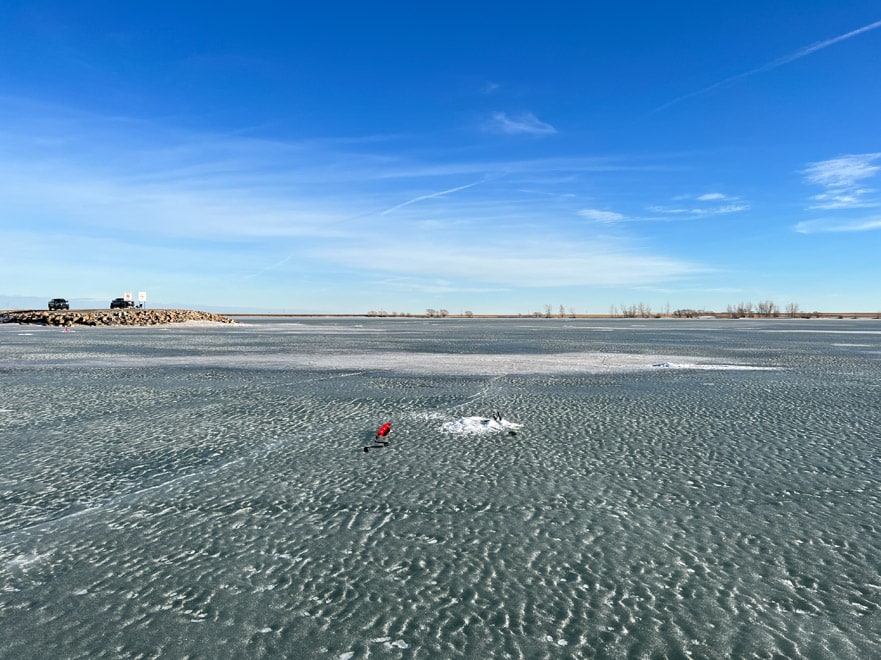
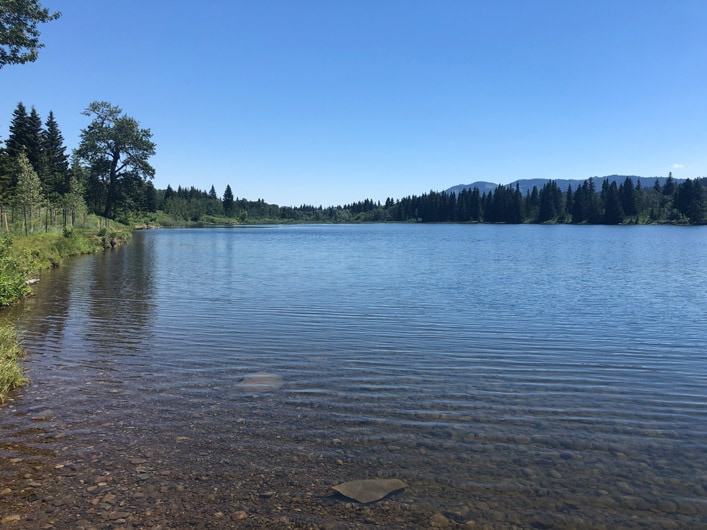
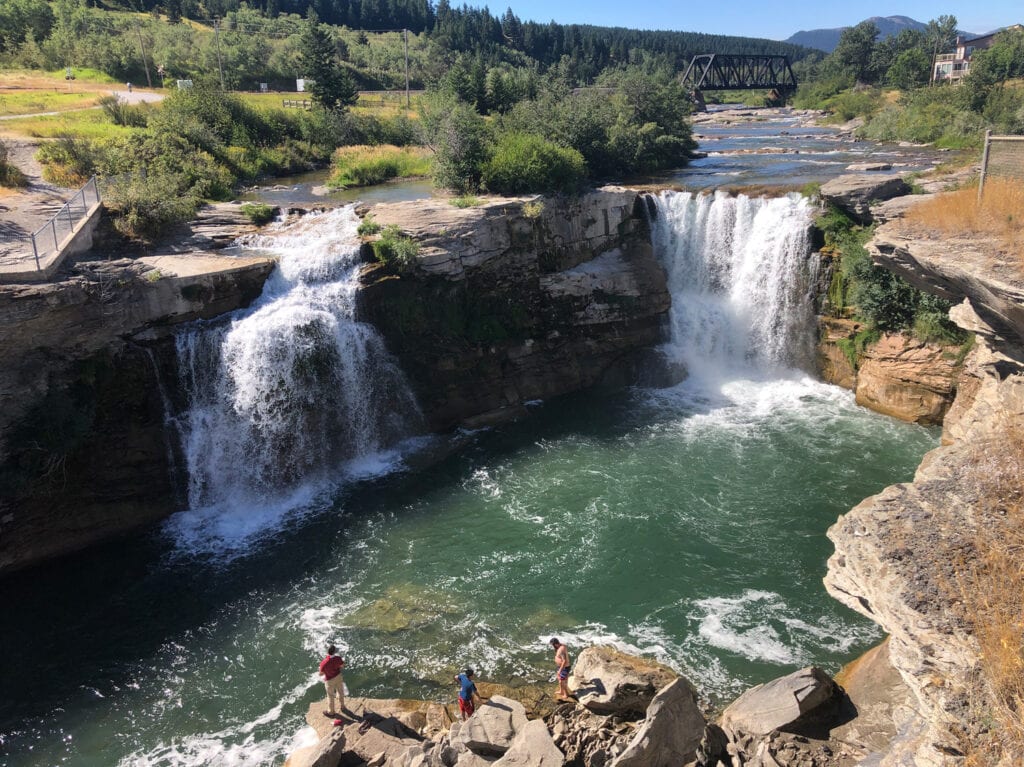
Castle River is a popular fly fishing destination in southern Alberta. The most common fish species found in the Castle River are Mountain Whitefish, Rainbow Trout, Bull Trout, and Cutthroat Trout.
The Castle River begins as two separate rivers, the West Castle River and the South Castle River, which merge into one just before the Castle River Bridge Campground.
Bears and other wildlife are common in the Castle River area due to its remote location, so carrying bear spray is highly recommended.
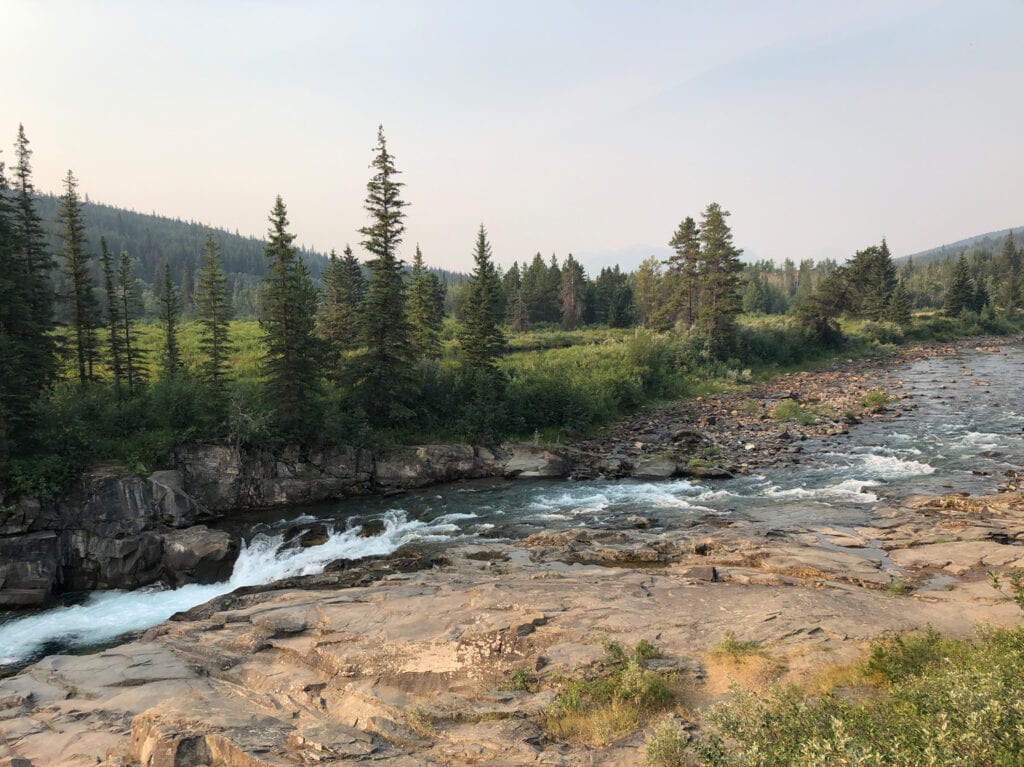
The Castle River is one of those southern Alberta rivers that can look incredible and still leave you wondering where all the trout are.
Clear mountain water runs over endless rocks. There are riffles everywhere, long gravel bars and the occasional deep green pool.
You make a few casts.
Nothing.
Walk upstream.
More riffles.
Still nothing.
Then you come around a bend, find a deeper section beside the bank and hook a rainbow trout on your second cast.
That is Castle River fishing.
The river is known for rainbow trout, cutthroat trout, mountain whitefish and bull trout, but the fish are not evenly distributed. Some stretches have plenty of shallow water and very little obvious holding habitat. Others contain deeper pools and current breaks that give trout a reason to stay.
For anglers looking for fly fishing near Pincher Creek, trout fishing in Castle Provincial Park or a river they can explore without a boat, the Castle is worth learning.
The trick is knowing which water to concentrate on.
Is the Castle River Good for Fishing?
Yes, particularly if you enjoy fishing wild trout in mountain and foothill streams.
The Castle River flows through southwestern Alberta and eventually joins the Oldman River system.
Much of the upper watershed lies within Castle Provincial Park and Castle Wildland Provincial Park, a protected landscape known for its native trout habitat.
The river offers several different fishing experiences.
You can explore relatively small water along the West Castle River, fish the main river around Castle River Bridge or visit the Castle Falls area.
Unlike a stocked trout pond, the Castle requires more searching.
Fish may be scattered. Water levels can change rapidly with mountain weather, and heavily visited access points may not produce consistently.
It is a good river, but not necessarily an easy one.
What Fish Are in the Castle River?
Four fish are especially relevant to anglers exploring the Castle River system.
Rainbow trout
Rainbow trout are a common target in the Castle River. They use riffles, runs, pools and current seams, particularly where flowing water delivers food without forcing them to fight the strongest current.
Westslope cutthroat trout
Cutthroat trout are native to the Oldman River watershed, which includes the Castle system. They prefer cold, clean water and are an important part of native trout conservation in southern Alberta.
Bull trout
Bull trout are native to the Castle watershed. They are predators that use deeper pools, cover and cooler water. They should not be assumed to be abundant in every stretch.
Mountain whitefish
Mountain whitefish are another native fish in the system. They feed heavily on aquatic insects and are most likely to interest anglers using small nymphs near the bottom.
Rainbow trout and cutthroat trout can also hybridize, producing fish sometimes called cutbows.
That makes identifying every trout from a quick glance more difficult than anglers expect.
Where Should You Start Fishing?
Two established locations make particularly useful starting points for somebody unfamiliar with the river.
Castle River Bridge Campground
Castle River Bridge Campground is approximately 36 kilometres southwest of Pincher Creek within Castle Provincial Park.
It sits beside the river and provides a practical base for fishing, camping and exploring the surrounding area.
The campground has 25 serviced sites, according to Travel Alberta.
The nearby river contains gravel banks, runs and pools, making it a useful place to learn what Castle River water looks like.
I would not expect the most convenient section beside the campground to automatically provide the best fishing.
Instead, look at the water and identify the features worth fishing.
A deeper outside bend is more interesting than a long stretch of shallow gravel.
A boulder creating a quiet pocket is worth investigating.
And a short section containing several different current speeds may be more productive than hundreds of metres of uniform riffles.
Castle Falls
Castle Falls is another recognizable destination in Castle Provincial Park.
The campground is about 42 kilometres southwest of Pincher Creek and has unserviced camping beside the river.
Some campsites are close to the water, making it convenient to combine fishing with a camping trip.
The attraction is obvious.
Cold mountain water flows through a rocky forested valley, with the falls providing one of the area’s most recognizable natural features.
But do not assume you need to fish directly beside the waterfall.
Falls and cascades create powerful currents, slippery rock and potentially dangerous hydraulic conditions.
The better approach is to explore safely accessible river sections away from hazardous water.
Look for runs, bends, pools and slower pockets.
What About the West Castle River?
The West Castle River is worth considering if you prefer smaller stream fishing.
It joins the main Castle River in the Castle River Bridge area.
Compared with the larger main river, portions of the West Castle can offer more manageable casting distances and shallow water where individual pools are easier to identify.
This can appeal to fly anglers who enjoy walking upstream and fishing a succession of small pockets.
You do not need a long cast.
You need an accurate one.
A fly drifting naturally through a pocket behind a rock can be more productive than repeatedly casting across an entire run.
The West Castle is not automatically easier to catch fish in, however.
Small clear water means trout can be particularly sensitive to movement along the bank.
Approach carefully, fish the near water first and avoid stepping into a pool before you have made a cast.
Why Is There So Much Shallow Water?
One common frustration with the Castle River is how much of it appears to be shallow riffles.
There is nothing inherently wrong with riffles.
They provide oxygenated water and support aquatic insects.
But shallow, uniform current does not always offer the shelter larger trout prefer.
That is why I would concentrate on places where the river changes.
A gravel riffle drops into a deeper run.
An outside bend creates a channel.
A large boulder interrupts the current.
An undercut bank provides cover.
A tributary enters the main river.
These are the sections where a trout can hold in relatively comfortable water while food passes nearby.
If you spend the entire day casting through shallow water that all looks identical, you may never reach the best habitat.
The Most Useful Water to Recognize
Imagine walking along the Castle and finding a long bend.
The inside of the bend contains a shallow gravel bar.
The outside bank is steep.
The surface looks darker beside that bank, indicating greater depth.
Current moves along the deeper edge.
That is the place I would fish first.
The deeper channel gives trout protection.
The current delivers food.
The bank may provide shade or cover.
It combines several things trout need in one small area.
You do not need a secret Castle River fishing spot when you can recognize this type of habitat yourself.
Fly Fishing the Castle River
Fly fishing is one of the best ways to explore the Castle.
A four or five weight fly rod is a practical choice for general trout fishing in much of the river.
You can cover smaller pools, make short casts through pocket water and still handle ordinary river trout comfortably.
The bigger decision is whether fish are feeding near the surface or closer to the bottom.
When Fish Are Rising
Dry flies are an obvious choice.
Watch how the fish feed.
If you see repeated rises, look for insects moving on the water.
A small caddis imitation, mayfly or general attractor fly can work well.
Useful patterns to bring include:
- Elk Hair Caddis
- Parachute Adams
- Stimulators
- Foam ants
- Small grasshopper patterns
Terrestrial patterns can be especially interesting during warmer weather when insects fall from bankside vegetation.
Present the fly naturally.
A trout that ignores a dragging dry fly may take the same pattern on a better drift.
When Nothing Is Rising
Switching to a nymph is often more productive than waiting indefinitely for surface activity.
Small aquatic insects are available to fish throughout much of the season.
Good general patterns include:
- Pheasant Tail nymphs
- Hare’s Ear nymphs
- Prince nymphs
- Stonefly nymphs
- Small caddis larva patterns
The important part is getting the presentation into the correct feeding depth.
On the Castle, one pool may be only a couple of feet deep while the next contains significantly deeper water.
Adjust accordingly.
When You Want to Search for Larger Trout
A small Woolly Bugger or baitfish style streamer gives you another option.
Work it through deeper pools, beside banks and around substantial cover.
Larger trout may take advantage of small fish and other substantial food.
But there is no reason to throw a large streamer into every shallow riffle.
Save it for water where a predator has somewhere useful to hold.
Can You Fish the Castle River With a Spinning Rod?
Yes.
A spinning rod can be an effective way to target trout in the Castle River wherever your chosen tackle and method are permitted under current official information.
A light or medium light spinning setup is suitable for ordinary river trout fishing.
I would concentrate on small lures.
A compact inline spinner is probably the easiest starting point.
It produces vibration and flash and can be controlled through pools and current seams.
Small spoons and minnow imitations are also useful.
With any of these presentations, keep an eye on depth.
You want the lure passing through water where trout can feed, not constantly dragging along the rocky bottom.
What Lures Should You Bring?
For an ordinary Castle River spinning trip, I would pack:
- Small silver inline spinners
- Small gold inline spinners
- Compact trout spoons
- Small minnow shaped lures
- A few light jig heads and soft plastics
That covers most situations without making the tackle box complicated.
There is no need to bring every lure you own.
If a small spinner is not producing, the most useful next move may be changing where you fish rather than changing to a different colour.
When Is the Best Time to Fish the Castle River?
The answer depends heavily on runoff.
Like many Alberta mountain rivers, the Castle responds to snowmelt and rainfall.
Spring and early summer can produce high, powerful flows.
Those conditions may make some stretches difficult to fish and others unsafe to enter.
Once runoff settles, the water often becomes easier to read.
You can see deeper pools, current seams and rocks.
During summer, dry fly fishing may become more interesting as insect activity increases.
Later in the open water season, cooling temperatures can change feeding activity again.
I would not choose a trip based only on a calendar date.
I would check the river conditions first.
Check Castle River Water Levels Before Leaving
Water Survey of Canada identifies a monitoring station called Castle River near Beaver Mines, station 05AA022.
The federal station index is a useful place to look for available hydrometric information.
Check whether recent readings are available before relying on a particular flow number.
If data is available, the trend is often more useful than a single measurement.
Is the river rising rapidly?
Has it been falling for several days?
Did heavy rainfall produce an obvious change?
Those questions can explain why the river is behaving differently from your previous visit.
But a monitoring station cannot replace looking at the actual stretch you plan to fish.
Conditions can differ between the upper branches and the larger downstream river.
Is Castle River Fishing Good After Rain?
Sometimes.
Light rain and cloud cover can help by reducing visibility and making trout more comfortable feeding.
But prolonged heavy rain can quickly create high or muddy water.
The river may also receive different amounts of rainfall across its watershed.
An upper tributary could be affected while another portion remains clearer.
If the river is rising quickly and visibility has deteriorated, I would not force the trip.
There are plenty of other days to fish.
Why Am I Not Catching Anything?
The Castle is a river where good looking scenery can distract anglers from good fishing habitat.
A few common problems are worth considering.
You are fishing too much shallow riffle water.
Look for deeper channels, pools and current breaks where trout can rest.
You are staying beside the campground.
Established access is useful, but obvious water receives attention. Explore other safely accessible stretches.
The trout see you approaching.
Clear water makes careless bank movement a problem.
Your fly is not reaching the correct depth.
Change the depth before changing the pattern repeatedly.
The water is too high or discoloured.
Mountain runoff can completely change the river.
You are expecting fish in every pool.
Trout distribution is rarely that consistent.
On an unfamiliar Castle River trip, I would spend more time finding productive water and less time trying to force one location to work.
Native Trout Are an Important Part of the Castle Watershed
The Castle region is more than a fishing destination.
It contains important habitat for native Westslope cutthroat trout and bull trout.
Both species face conservation concerns in Alberta.
The province identifies habitat fragmentation, changes to streams and interactions with introduced fish among the threats affecting native trout populations.
Rainbow trout are established in the broader southern Alberta river system and can hybridize with native cutthroat trout.
That means a fish showing a red slash beneath the jaw may not necessarily be a genetically pure cutthroat.
Fish identification can become complicated.
For anglers, the useful approach is to recognize that the Castle supports different trout populations with different conservation needs.
Handle fish carefully, minimize unnecessary air exposure and avoid disturbing spawning habitat.
Planning a Fishing Weekend in Castle Provincial Park
For a first visit, I would consider staying at Castle River Bridge Campground or Castle Falls.
That gives you established access and a convenient base for exploring.
Bring:
- A light fly or spinning rod
- A compact selection of trout presentations
- Polarized sunglasses
- Suitable footwear
- A landing net
- Bear spray
- Offline maps
- Clothing for changing mountain weather
The Castle is bear country.
It is also a region where road conditions, weather and park advisories can change.
Check Alberta Parks before travelling, particularly if you plan to use smaller access roads or explore farther into the watershed.
Remember that the park map includes roads with different access and vehicle requirements.
Do not assume every road visible on your phone is suitable for an ordinary passenger vehicle.
Castle River Fishing Questions
Is the Castle River better than the Oldman River?
They offer different fishing experiences. The Castle provides smaller mountain water, while the larger Oldman River has broader runs and a different range of habitat. The better choice depends on whether you prefer exploring smaller pools or fishing a larger river.
What is the difference between Castle River and West Castle River?
West Castle is a tributary that joins the main Castle River. Some of its water is smaller and well suited to short, accurate casts. The main river offers larger runs, longer pools and more varied current.
Are there bull trout in the Castle River?
Bull trout are native to the Castle watershed, but they should not be assumed to be common in every section. They use suitable cold water habitat and can become predators as they grow.
Can beginners fish the Castle River?
Yes, particularly from safely accessible riverbanks near developed recreation areas. Beginners should concentrate on manageable water rather than difficult crossings or powerful current.
What is the best fly for the Castle River?
There is no universal best pattern. Caddis and general dry flies are useful when trout feed near the surface. Pheasant Tail, Hare’s Ear and Prince nymphs are good choices when fish are feeding below the surface.
Is the Castle River stocked?
It is best understood as a natural stream fishery rather than a regularly stocked trout pond. Do not confuse it with nearby stocked lakes such as Beaver Mines Lake, which have different fishery characteristics.
What I Would Do on My First Visit
I would start at Castle River Bridge or Castle Falls, using the established access to get familiar with the water.
Then I would look for one genuinely good pool.
Not the longest riffle.
Not the easiest place to stand.
A pool with depth, cover and current moving through it.
I would fish that carefully.
If trout were rising, I would try a dry fly.
Otherwise, I would begin with a nymph or small spinner.
After covering the useful feeding lanes, I would move.
That approach is much more productive than choosing a beautiful section of shallow river and throwing the same lure for three hours.
The Castle River rewards anglers who understand where trout want to live.
Once you begin recognizing those places, all those long stretches of rocks and shallow current become much easier to sort through.