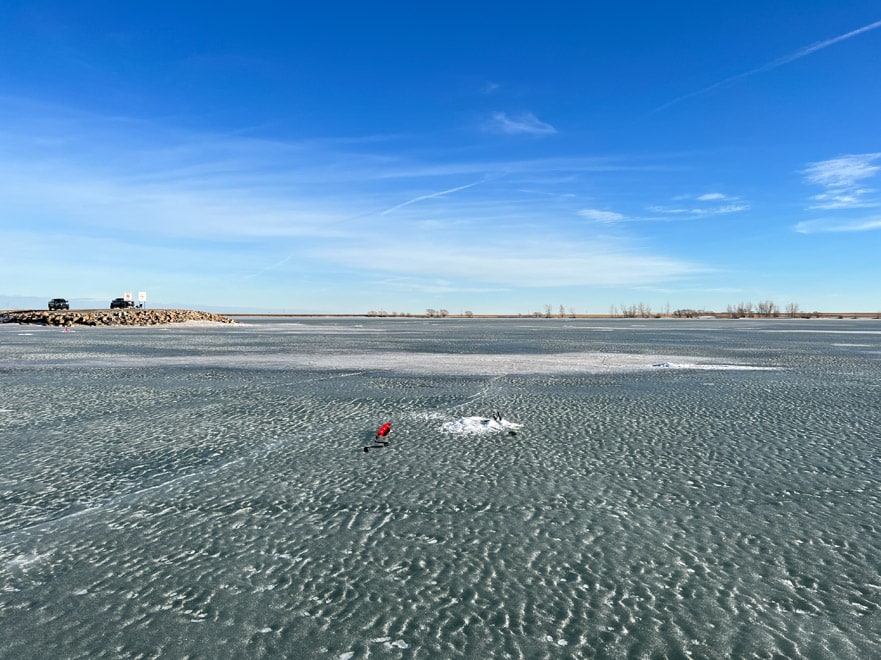
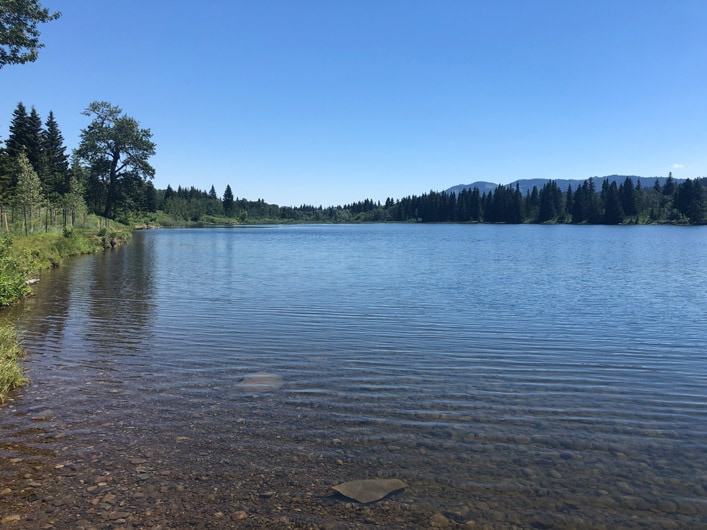
The Crowsnest River is located in southern Alberta along Highway 3 and is a popular destination for fly fishing, particularly for trout.
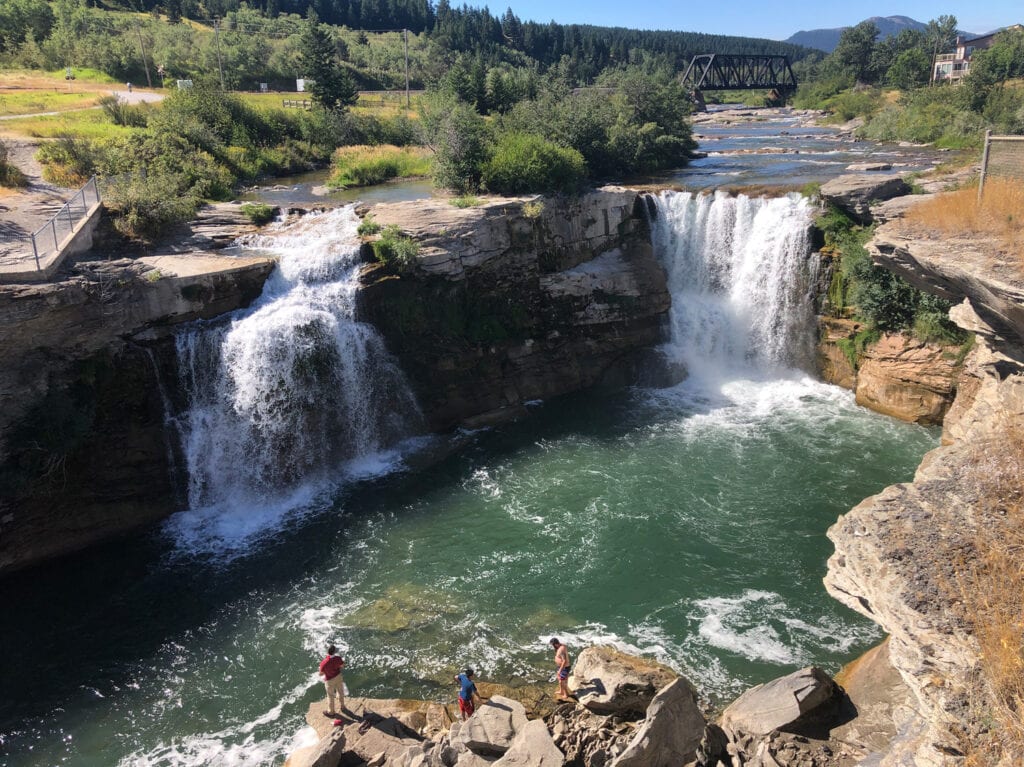
One of the most picturesque and popular fishing spots along the Crowsnest River is Lundbreck Falls.
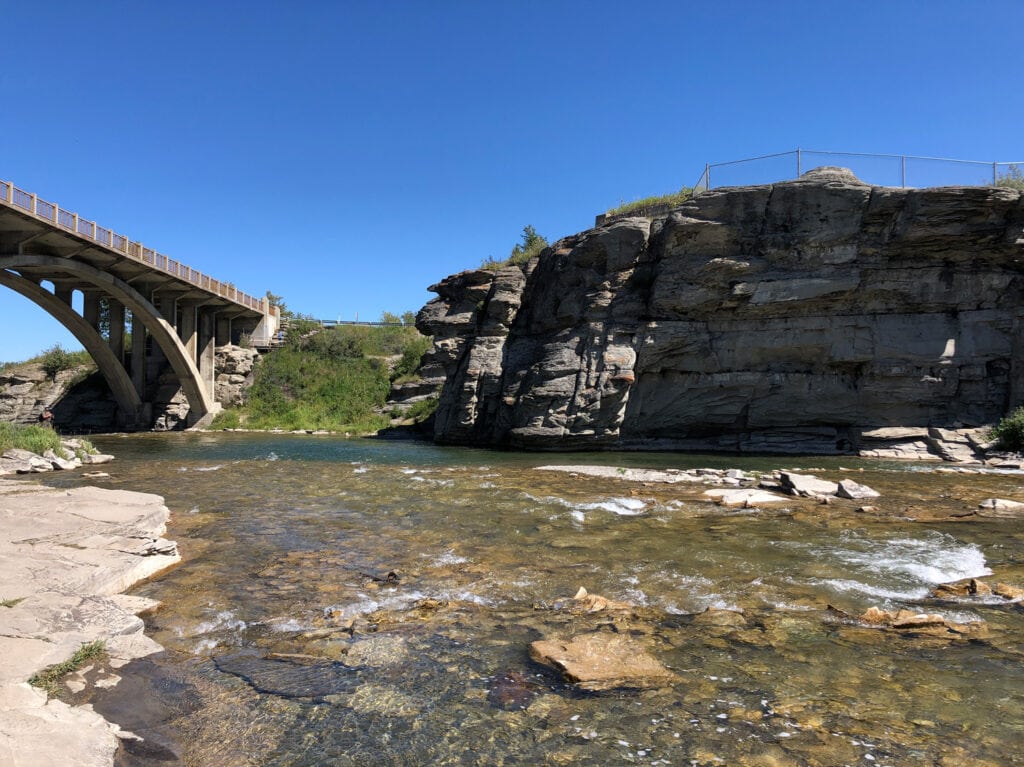
The Crowsnest River has a reputation that can give first time visitors the wrong idea.
People hear about big rainbow trout, excellent fly fishing and impressive numbers of fish.
Then they drive Highway 3 through Crowsnest Pass, find a beautiful stretch of river and spend the afternoon without a bite.
It happens.
The Crowsnest is one of southern Alberta’s best known trout rivers, but it is also a technical fishery where water conditions, fishing pressure and presentation can make an enormous difference.
It is not a stocked trout pond.
It is not the Bow River.
And despite its mountain setting, it is not primarily a cutthroat trout fishery.
The main river has historically been dominated by rainbow trout and mountain whitefish, with brown trout, brook trout, cutthroat trout and bull trout occupying different parts of the broader system.
The river also has a complicated history involving mining, development, intense fishing pressure and documented whirling disease.
Understanding that background makes the fishing much easier to appreciate.
If you are planning a Crowsnest River fishing trip, this guide covers where to begin, what fish actually live here, which flies and lures make sense, how to interpret river flows and what makes this particular Alberta trout river different.
Why Is the Crowsnest River So Famous?
The Crowsnest has several advantages that few Alberta trout rivers share.
It runs through a mountain community with highway access, accommodation, restaurants and fishing shops close to the water.
You can fish through the communities of Coleman, Blairmore and Frank, explore sections farther downstream or build an entire trip around the river.
You do not need a boat.
You do not need a long wilderness approach.
And because the river is relatively small, much of it can be fished with ordinary trout tackle and manageable casting distances.
The fishing reputation is based on more than scenery.
The Crowsnest has historically supported substantial populations of wild trout, particularly rainbow trout, and can produce surprisingly large fish for a river of its size.
But that reputation needs context.
An excellent trout river is not necessarily an easy trout river.
What Does Fisheries Research Actually Say About the Crowsnest?
This is where the river becomes especially interesting.
In 2010, the Alberta Conservation Association completed a major fish population assessment of the Crowsnest River drainage.
Researchers captured 3,979 salmonid fish in the main river during the assessment.
Of those fish:
- Approximately 65 percent were rainbow trout.
- Approximately 30 percent were mountain whitefish.
- Other trout species made up a much smaller portion of the main river catch.
The assessment estimated about 80,000 rainbow trout and 16,500 mountain whitefish throughout the surveyed main river.
Those numbers help explain why the Crowsnest developed such a strong fishing reputation.
They are historical estimates from 2010, not a count of fish living in the river today.
That distinction matters.
You may encounter articles claiming the Crowsnest contains a specific number of trout per kilometre or mile.
Unless the information comes from a recent survey, it should not be treated as a current population estimate.
The river has experienced important ecological changes since that older research.
Mountain Whitefish Are a Much Bigger Part of This River Than Most Anglers Expect
Most people visiting the Crowsnest want trout.
Usually rainbow trout.
Sometimes a big brown.
But the older fisheries assessment found that mountain whitefish were a major part of the main river population.
That is not a minor detail.
Mountain whitefish feed heavily on aquatic insects and can occupy the same runs that trout anglers fish.
If you are drifting nymphs close to the bottom, a whitefish is a very realistic catch.
They also tend to gather in groups.
You might fish through a run and catch several whitefish before encountering a trout.
That does not necessarily mean you are fishing the wrong water.
You may simply be presenting your flies where whitefish are feeding.
For anglers who enjoy light tackle, mountain whitefish are an excellent fish in their own right.
Where Does the Crowsnest River Start and End?
The river begins at Crowsnest Lake near the Alberta and British Columbia border.
From there, it flows east through Crowsnest Pass, passing near several communities before continuing through the Lundbreck area toward the Oldman Reservoir system.
One of the useful features of this geography is how closely the river follows the Highway 3 corridor.
But the landscape changes along the way.
The water flowing out of Crowsnest Lake is different from the river through Blairmore.
The Frank Slide area has its own unusual geology.
Farther east, the river opens into longer runs and deeper pools before reaching Lundbreck Falls.
You can spend several days fishing different parts of the Crowsnest without feeling as though you are repeating the same trip.
A River That Runs Through Real Towns
Many famous trout streams are reached by driving into remote mountain valleys.
The Crowsnest is different.
A substantial part of the river flows through communities with a long coal mining history.
That gives anglers convenient access to services, but it also means the river shares its corridor with roads, railway infrastructure, residential properties and developed land.
Do not assume every attractive stretch beside Highway 3 has public bank access.
A bridge tells you where the river is.
It does not automatically give you permission to cross neighbouring property.
Use established public areas, municipal trails and confirmed access points.
Coleman and Blairmore: Convenient Water With Real Trout
If you are visiting Crowsnest Pass for the first time, the river around Coleman and Blairmore is worth studying.
The municipal trail network follows portions of the river, and some public areas provide opportunities to observe the water before choosing where to fish.
There is a mixture of shallow riffles, deeper runs, bankside cover and larger pools.
You may find fish close to development.
In fact, some of the best looking trout habitat can appear surprisingly close to a road or neighbourhood.
The problem is fishing pressure.
Obvious places are easy for everybody to find.
A trout living in a heavily visited run may encounter artificial flies repeatedly.
That fish may be less willing to move several feet to eat something suspicious.
This is where thoughtful presentation becomes more useful than changing to a more colourful fly.
Why the Frank Slide Area Is Different
The Crowsnest River passes through one of Alberta’s most recognizable landscapes.
In 1903, a massive rockslide from Turtle Mountain buried part of the community of Frank.
The rockfall transformed the valley.
Today, the surrounding landscape still contains enormous amounts of broken limestone and rock debris.
For anglers, this creates an unusual setting.
You are fishing a mountain river surrounded by the physical evidence of one of Canada’s most significant natural disasters.
Rocky structure can create complicated currents, uneven footing and abrupt depth changes.
This is a section where I would spend more time studying the water before stepping into it.
A short walk along the bank can reveal more useful information than immediately crossing the river.
Check the River Flow at Frank Before Leaving Home
This is one of the most useful pieces of fishing information available for the Crowsnest.
There is an official hydrometric station called Crowsnest River at Frank, identified by station number 05AA008.
Water Survey of Canada monitoring provides river flow and level data where observations are available.
That is a more useful starting point than simply asking whether someone caught trout yesterday.
Look at recent flow trends.
Has the river been rising?
Falling?
Stable?
Did a storm produce a sudden increase?
Is today’s water level noticeably different from recent days?
Those questions matter because a trout river can change quickly.
One day you can see every rock.
The next, snowmelt or heavy rain makes the same stretch difficult to fish.
What Is a Good Flow for Crowsnest River Fishing?
There is no one perfect number.
It depends on the section you want to fish and what you are comfortable doing.
A river that is comfortable to fish beside Coleman may be very different farther downstream after tributaries have added water.
The safest approach is to compare today’s reading with the recent trend and then inspect conditions from shore.
A stable or gradually falling river is generally easier to interpret than one rising quickly after heavy rain.
Do not confuse a low numerical discharge with guaranteed safe wading.
A narrow channel can still contain powerful current.
And a low river can present its own fishing challenges if the water becomes unusually warm or clear.
What Anglers Experienced During 2026
Recent reports illustrate why checking water conditions matters so much.
In March 2026, local anglers described the Crowsnest as high, muddy and difficult to wade during a period of challenging weather.
Other anglers planning trips around the same period were asking which flies to bring and whether the river was worth the drive.
By July, visiting fly anglers were again reporting enjoyable fishing in the Crowsnest and neighbouring southern Alberta rivers.
These experiences are not contradictory.
They are snapshots of different river conditions.
The important lesson is that a good trout river can provide poor fishing conditions on a particular day.
That is especially true when you have travelled several hours and cannot easily return tomorrow.
Lundbreck Falls: The River’s Major Landmark
Farther east, the Crowsnest River reaches Lundbreck Falls.
This is one of the most recognizable fishing destinations in southern Alberta.
Lundbreck Falls Provincial Recreation Area provides a developed place to visit the river, with a campground, day use facilities and established viewing areas.
Alberta Parks specifically identifies fishing as one of the activities available in the recreation area.
The falls are also important because the fish community changes along this part of the system.
The river above and below Lundbreck Falls should not be treated as identical.
What Fish Are Above Lundbreck Falls?
Rainbow trout are the main attraction.
Mountain whitefish are also an important part of the fishery.
Brown trout and brook trout have been documented in the upper main river, though neither dominated the historical survey.
Small numbers of cutthroat trout and hybrids can occur within the broader system.
For somebody visiting specifically to fish the classic Crowsnest River trout water, rainbow trout are the most sensible primary target.
They use riffles, runs, pools and feeding lanes throughout suitable stretches.
And larger rainbows can be demanding fish in clear water.
What Fish Are Below Lundbreck Falls?
The lower Crowsnest provides opportunities for rainbow trout, mountain whitefish and other species.
Historical Alberta Conservation Association sampling also documented bull trout downstream of Lundbreck Falls.
That does not mean every deep pool below the falls contains a bull trout.
The original assessment found bull trout only in the main river downstream of the falls, not throughout every surveyed section.
This is also where anglers sometimes encounter different fish than they expected.
The lower river is connected to a much larger aquatic system, and its fish community is more varied than the better known rainbow trout sections farther upstream.
Are There Native Cutthroat Trout in the Crowsnest River?
Yes, but the distinction between the main river and its tributaries is important.
The older Alberta Conservation Association assessment found that several tributaries supported significant Westslope cutthroat trout populations.
The most intact populations were associated with tributaries including portions of Island, Giardi, Star, Blairmore, Gold and Rock creeks.
The main Crowsnest River, however, was dominated by rainbow trout and mountain whitefish.
That means a broad claim that the Crowsnest is a cutthroat trout river is misleading.
There are native cutthroat populations in the drainage.
But they are not the dominant fish throughout the main river.
Those tributary populations also have conservation value and should not be treated as interchangeable with the larger mainstem fishery.
Why Crowsnest Trout Can Be So Difficult
A rainbow trout living in the Crowsnest has some advantages over the angler.
It knows the current.
It knows where food normally travels.
It has cover nearby.
And in clear water, it can often see you before you see it.
Add fishing pressure and the challenge increases.
A large trout may ignore an artificial fly that drifts unnaturally.
It may refuse a dry fly attached to a visible line.
It may feed on tiny insects while anglers repeatedly show it oversized patterns.
This is one reason the Crowsnest attracts experienced fly anglers.
You can see a fish feeding and still struggle to catch it.
Watching One Feeding Trout Can Teach You More Than Covering an Entire Run
Suppose you see a rainbow trout rising repeatedly.
It is not chasing insects everywhere.
It is feeding in one narrow current lane.
You cast upstream.
Your fly lands in the right location.
Then the current grabs the line and drags the fly sideways.
The trout ignores it.
You change to another pattern.
Same result.
Then another.
Still nothing.
The problem may not be the fly.
The trout is accustomed to food travelling naturally with the water.
Until your artificial fly does the same, the fish has little reason to eat it.
This is where drag free presentation becomes more valuable than owning another twenty patterns.
Dry Fly Fishing on the Crowsnest
The Crowsnest is well known for dry fly fishing.
During suitable insect activity, trout may feed near the surface on mayflies, caddisflies and other available insects.
Large surface feeding trout are one of the main reasons people travel here.
But you should not arrive assuming fish will rise all day.
Surface feeding depends on the insects available and how the trout are behaving.
Some days the best fishing occurs during a short feeding period.
At other times, fish may remain close to the bottom for most of the day.
Watch first.
Then choose how to fish.
Small Dry Flies Can Matter More Than You Expect
Crowsnest trout sometimes feed on very small insects.
That can make an ordinary large attractor pattern difficult to sell.
If fish are rising softly and repeatedly, try a smaller imitation.
Look at the size of insects on the surface.
Watch whether trout are breaking the surface aggressively or simply sipping.
A fish eating tiny mayflies may barely disturb the water.
You may see only a small ring.
That is the kind of feeding activity where accurate presentation and a modest fly can make a big difference.
What Flies Work Best on the Crowsnest River?
I would organize a Crowsnest fly box by feeding behaviour rather than buying one enormous assortment.
For fish feeding on the surface:
- Blue winged olive style mayflies
- Adams patterns in several sizes
- Caddis dries
- Small parachute patterns
- Ants and beetles during warmer weather
For fish feeding below the surface:
- Pheasant tail nymphs
- Hare ear nymphs
- Stonefly nymphs
- Small mayfly nymphs
- Midge larvae and pupae
For searching larger water:
- Woolly buggers
- Small leech patterns
- Sculpin style streamers
- Compact baitfish imitations
That selection gives you realistic options without carrying hundreds of flies.
Small Nymphs Are a Crowsnest Specialty
If you are new to the river, this is one tactic worth paying attention to.
Local anglers have found that very small nymphs can produce trout even when larger patterns are being ignored.
In some conditions, a size 20 or 22 nymph can be more effective than a much larger fly.
Dark colours are useful.
So are subtle olive and brown patterns.
Purple is another colour worth carrying in very small nymphs.
There is no need to believe one colour is magical.
The useful lesson is that trout sometimes prefer food that looks almost insignificant to the person standing on shore.
Stoneflies Are Worth Understanding
Stonefly nymphs live in rivers with suitable rocky habitat and flowing water.
They can be an important food source for trout.
The Crowsnest has plenty of water where stonefly imitations make sense.
A weighted stonefly nymph can also help reach deeper feeding lanes.
I would particularly consider one when fishing a substantial run where a tiny unweighted fly is struggling to reach bottom.
The heavier fly can help establish depth, while a smaller second fly can imitate the more delicate food trout are taking.
Streamers Have a Place Here Too
Not every trout in the Crowsnest is living on tiny insects.
Larger brown trout and rainbow trout may eat small fish.
A streamer can be useful when covering deeper pools, undercut banks and shaded water.
It also gives you an alternative when nothing is visibly feeding at the surface.
But avoid treating streamer fishing as simply dragging a huge fly through every pool.
Think about where a predator can ambush prey.
The edge of faster current.
A deeper bank.
A large rock.
A sudden change in depth.
Put the streamer where a fish has a reason to be.
Can You Catch Crowsnest Trout With a Spinning Rod?
Yes.
Although the Crowsnest is strongly associated with fly fishing, trout can also be caught using appropriately presented spinning lures.
A small spinner, spoon or minnow imitation can be effective.
The key is not using heavy lake fishing tactics in a relatively small river.
Large lures are not automatically better.
A compact presentation is easier to control through narrow seams and shallower runs.
It also makes it easier to avoid dragging exposed hooks through rocks.
Check the current official information for your exact stretch before selecting tackle or fishing methods.
How I Would Fish a Spinner on the Crowsnest
I would start by choosing a pool or run rather than making random casts.
Then I would cast slightly upstream or across the current.
Let the spinner settle to the depth I want.
Retrieve just fast enough to keep the blade turning.
The current does much of the work.
The challenge is making the lure travel through the fish’s feeding area rather than ripping it across the river.
I would particularly concentrate on places where faster water enters deeper pools or travels beside a slower edge.
A small spinner can be extremely useful for searching several different runs during a short trip.
The Crowsnest Is Also a Mountain Whitefish River
Whitefish deserve more attention than they usually receive in articles about the Crowsnest.
They are native to the system.
They feed heavily on aquatic insects.
And the historical fish survey showed they were present in substantial numbers.
They are usually more interested in a small food item travelling close to bottom than in chasing a large moving lure.
If trout are ignoring your presentation but you repeatedly see fish near the riverbed, whitefish are worth considering.
Small nymphs and careful depth control make sense.
A good mountain whitefish on light fly tackle is also a surprisingly strong fish.
Is Whirling Disease a Problem in the Crowsnest River?
Yes. It is a documented issue.
This is one of the most important facts missing from many short Crowsnest River fishing guides.
In 2018, Alberta government staff identified clinical signs of whirling disease in rainbow trout and mountain whitefish from the Crowsnest River.
The province followed that work with a detailed study in 2019.
Researchers placed uninfected rainbow trout in monitored cages at several locations in the Crowsnest and Oldman river systems.
The findings documented substantial differences in disease exposure between sites.
Some lower Crowsnest locations showed very high infection prevalence during the study.
Other upstream locations showed much lower exposure.
The research demonstrated that disease pressure was not uniform throughout the river.
What Does Whirling Disease Mean for Fishing?
Whirling disease is caused by a microscopic parasite that affects salmonids, including trout and whitefish.
Young fish can be particularly vulnerable.
Severe infection may cause skeletal abnormalities, abnormal swimming behaviour and a darkened tail.
But not every infected fish shows obvious symptoms.
More importantly, disease impacts can differ between species, ages and locations.
The presence of whirling disease does not prove that every fish in the river is infected.
It also does not allow us to calculate today’s trout population from an old study.
That requires current fisheries monitoring.
What the research does show is that the Crowsnest is a real river ecosystem facing real biological pressures.
Its trout population should not be represented using old abundance numbers as though nothing has changed.
Cleaning Fishing Equipment Matters Here
Whirling disease can spread through contaminated water, mud and equipment.
Alberta encourages anglers to clean, drain and dry their equipment between waterbodies to reduce the risk of spreading aquatic pests and disease.
This is especially relevant if your trip includes the Crowsnest, Oldman, Castle and other southern Alberta waters.
Do not move wet equipment and sediment carelessly between rivers.
It is a small habit with important consequences for native fish.
What Time of Year Is Best for Crowsnest River Fishing?
It depends on what you want from the trip.
Spring
Water can be cold, and fish may hold in deeper, slower sections.
Midges, small mayflies and subsurface presentations can be useful.
Snowmelt and weather can cause considerable changes in flow.
Early Summer
The river can become high or discoloured during runoff.
Some days offer excellent fishing.
Others are difficult.
Check the Frank gauge rather than assuming the river is fishable because you have reached a particular date.
Mid Summer
When flows settle, the river often becomes easier to approach.
Insect activity can create strong dry fly opportunities.
Clear water and fishing pressure can make trout demanding.
Early Autumn
Cooling weather can make fishing comfortable, and smaller mayfly or subsurface patterns may be useful.
The river may have good clarity, but local weather can still change conditions quickly.
Rather than choosing an entire trip around one supposedly perfect month, use the actual river conditions to make the decision.
The Crowsnest Wind Deserves a Mention
Anyone who spends time in Crowsnest Pass knows that wind can be a major part of the experience.
Strong wind creates two separate problems for fly anglers.
First, casting becomes difficult.
Second, fly presentation becomes less precise.
You may be able to reach the fish but struggle to control the line.
A strong crosswind can move the fly unnaturally and make delicate dry fly fishing frustrating.
On windy days, shorter casts and more sheltered water can be much more enjoyable.
You do not need to cast across the entire river to catch trout.
Sometimes changing the direction you fish makes more difference than changing the fly.
Why Do I See Big Trout but Cannot Catch Them?
This is one of the most frustrating Crowsnest experiences.
You find a good fish.
You can see it holding in the current.
You make several casts.
Nothing.
There are a few likely explanations.
The fish may not be actively feeding.
Your fly may be moving unnaturally.
Your nymph may be above or below the feeding lane.
You may be using something much larger than the available food.
Or the trout may already be aware of you.
The useful response is to observe the fish more closely.
Is it moving sideways to feed?
Is it rising?
Does it react to natural drifting insects?
Does it turn toward your presentation and then refuse?
Those details help determine what to change.
Blindly rotating through twenty flies usually tells you less.
Why Are There Trout in Town?
A river does not stop functioning as fish habitat because it passes through a community.
Trout still need suitable temperature, oxygen, food and places to rest.
Where those features exist, fish can live surprisingly close to roads, buildings and bridges.
The Crowsnest is a good example.
It also has the additional advantage of a rich aquatic insect community.
That food supply supports fish even in sections that do not look like remote mountain wilderness.
Some anglers walk straight past town water because they assume better fishing must be farther into the mountains.
That is not always true.
How Big Are Crowsnest River Trout?
Large rainbow trout are one of the attractions.
Local guiding services describe many Crowsnest rainbows in the mid teen inch range, with larger fish encountered regularly.
Brown trout can also reach impressive sizes.
But these descriptions should be treated as examples of the river’s potential, not a promise about the average fish you will catch today.
Historical fish sampling demonstrated that smaller rainbow trout were an important part of the population.
As with most wild trout rivers, there are more smaller fish than trophy fish.
A large, experienced trout is special precisely because it is not what you hook on every cast.
Can You Catch Bull Trout in the Crowsnest River?
Bull trout have been documented in the lower Crowsnest River.
The 2010 Alberta Conservation Association survey recorded bull trout downstream of Lundbreck Falls.
They should not be assumed to be common throughout the entire mainstem.
Bull trout are a native char that can become strongly predatory as they grow.
A fish shaped baitfish imitation or streamer can attract them in suitable water.
Correct identification is important because bull trout can be confused with other char.
Can You Catch Lake Trout in the Crowsnest River?
An interesting 2026 angler discussion involved a fish caught in the Crowsnest River that was identified from photographs as a lake trout.
That does not establish lake trout as a common river species.
Crowsnest Lake is connected to the upper river and contains a different fish community from the typical trout reaches downstream.
Unusual catches can happen around connected lakes and rivers.
But I would not plan a Crowsnest River trip around targeting lake trout.
If you catch an unfamiliar char, look carefully at its tail, spotting and fin markings rather than assuming it is a bull trout.
Are There Cutthroat Trout in the Crowsnest?
Yes, although they should not be considered the dominant fish throughout the main river.
The broader drainage includes native Westslope cutthroat populations in some tributaries.
Cutthroat trout and rainbow trout can also hybridize where their populations overlap.
That means fish identification may not always be as simple as checking for an orange slash beneath the jaw.
A suspected hybrid can show features of both species.
The important distinction is that native cutthroat conservation is a major issue in parts of southern Alberta, while the Crowsnest mainstem is principally known for its rainbow trout fishery.
Is the Crowsnest River Better Than the Bow River?
That depends on what you enjoy.
The Bow below Calgary is a large river with long runs, broad channels and abundant space.
The Crowsnest is much smaller.
It is more suited to deliberate walking, careful positioning and shorter accurate casts.
It can also be easier to see the fish you are trying to catch.
That can make the fishing more exciting.
And sometimes more frustrating.
On the Bow, a missed opportunity may disappear into hundreds of metres of water.
On the Crowsnest, you may stand and watch the same trout refuse you over and over again.
Both rivers teach useful skills, but they are different experiences.
Do You Need a Guide to Fish the Crowsnest?
No.
A reasonably experienced angler can explore the river independently.
But a good local guide can shorten the learning process considerably.
The value is not just finding a fish.
It is learning how trout position themselves in the river, how to control a drift and how to recognize insect activity.
That knowledge can make future independent trips much more productive.
For a visitor with limited time who wants to experience technical dry fly fishing, local instruction can be worthwhile.
For somebody who enjoys exploring and learning gradually, the river is accessible enough to discover on your own.
What Should You Check Before a Crowsnest River Trip?
For this particular river, I would prioritize a few pieces of information.
- Current flow at the Frank monitoring station
- Recent precipitation and forecast weather
- Wind conditions through Crowsnest Pass
- River clarity
- Any local access advisories
- Current official fishing information for the specific water being visited
If I had to choose just one, it would be the flow trend.
A high, muddy river changes every fishing plan.
A stable river lets you focus on fish behaviour instead.
Crowsnest River Fishing Questions
Is the Crowsnest River worth fishing?
Yes. It has a long reputation for wild rainbow trout fishing and offers excellent opportunities for anglers who enjoy small river fly fishing. It can also be technical and heavily pressured in easily reached stretches.
What fish are in the Crowsnest River?
Rainbow trout and mountain whitefish historically dominated the main river. Brown trout, brook trout, cutthroat trout and bull trout have also been documented in different parts of the drainage.
Where can I fish the Crowsnest River?
The river passes through Coleman, Blairmore, Frank and areas farther east toward Lundbreck Falls. Look for established public access and municipal trails, and verify property access before entering unfamiliar banks.
Is Lundbreck Falls good for fishing?
Lundbreck Falls is one of the river’s best known landmarks, and Alberta Parks identifies fishing as an activity at the recreation area. The falls divide different sections of the fishery. Exercise caution around the waterfall and swift water rather than assuming the pool directly beneath the falls is a safe place to enter.
What is the best fly for the Crowsnest River?
That depends on what fish are eating. Small mayfly and caddis patterns can work during surface feeding. Stoneflies, pheasant tails, midges and other nymphs are useful when fish remain below the surface.
Can you catch trout on spinning gear?
Yes. Small spinners, spoons and minnow imitations can catch trout when presented properly. Confirm the current fishing information for your exact stretch before selecting your methods.
Why are trout not biting?
High flows, poor presentation, fishing pressure, limited feeding activity and incorrect depth are common explanations. Watch how the fish behave before constantly changing lures or flies.
Is there whirling disease in the Crowsnest River?
Yes. Alberta documented clinical signs in the river in 2018 and conducted further research in 2019. The study found that disease exposure varied substantially among locations. Those results do not establish current fish abundance.
Is the Crowsnest River good for beginners?
It can be, especially for learning river structure and shorter fly casts. However, the clarity and fishing pressure can make trout challenging. Beginners should choose manageable water and avoid difficult wading conditions.
Are there still big trout in the Crowsnest River?
The river continues to have a reputation for large wild trout, and anglers still report impressive catches. However, older population estimates and individual trophy photographs should not be mistaken for a current scientific assessment of trout numbers.
The Most Useful Way to Approach the Crowsnest
I would begin with the river conditions rather than choosing a fly.
Check the flow.
Look at the weather.
Choose a manageable section.
Once you arrive, watch the river for a while.
See whether fish are rising.
Look at the aquatic insects.
Notice where fish are holding.
Then choose a presentation that matches what is happening.
The Crowsnest can be a demanding river, but it gives you plenty of information if you are willing to observe.
A trout rising repeatedly in one current lane is telling you something.
A whitefish holding near the bottom is telling you something different.
And a river suddenly running high and muddy after a storm is telling you to reconsider your plan.
You do not need a secret Crowsnest fishing spot to have a good trip.
You need to understand the water, recognize the fishery in front of you and adjust accordingly.
That is the difference between simply visiting one of Alberta’s famous trout rivers and beginning to learn how to fish it.