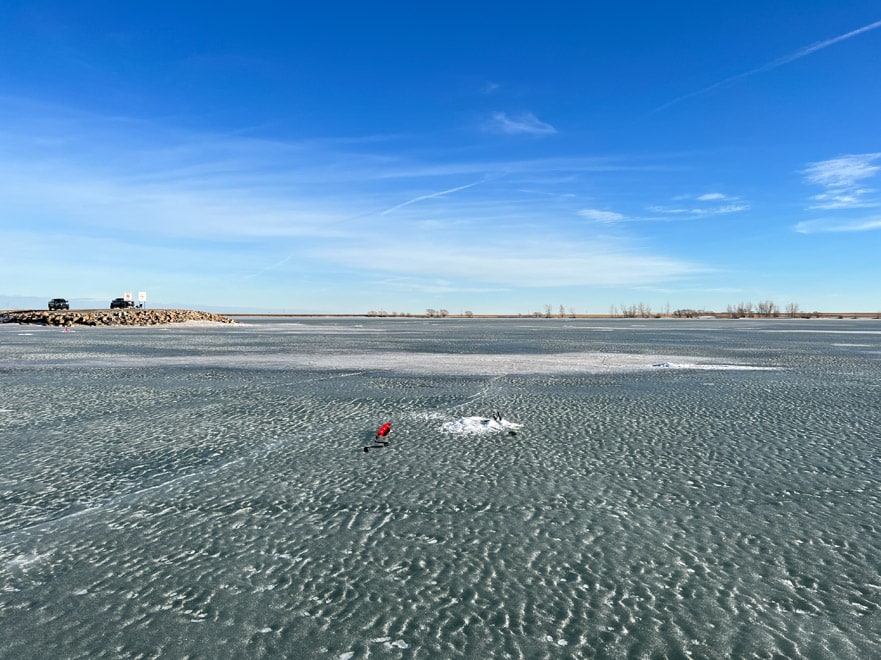
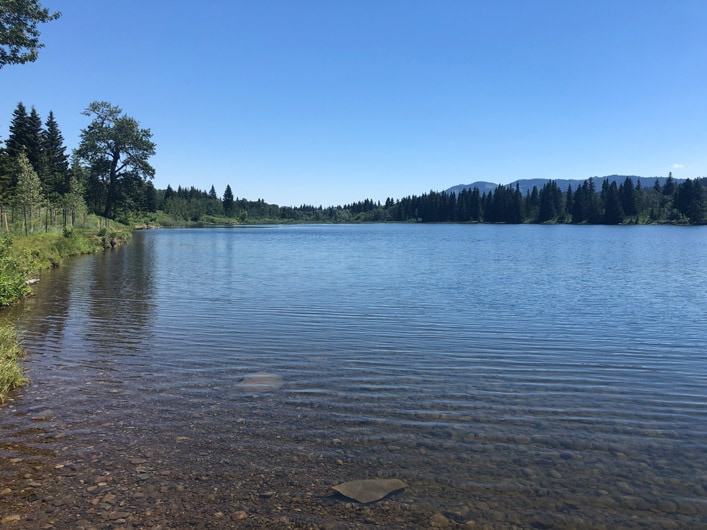
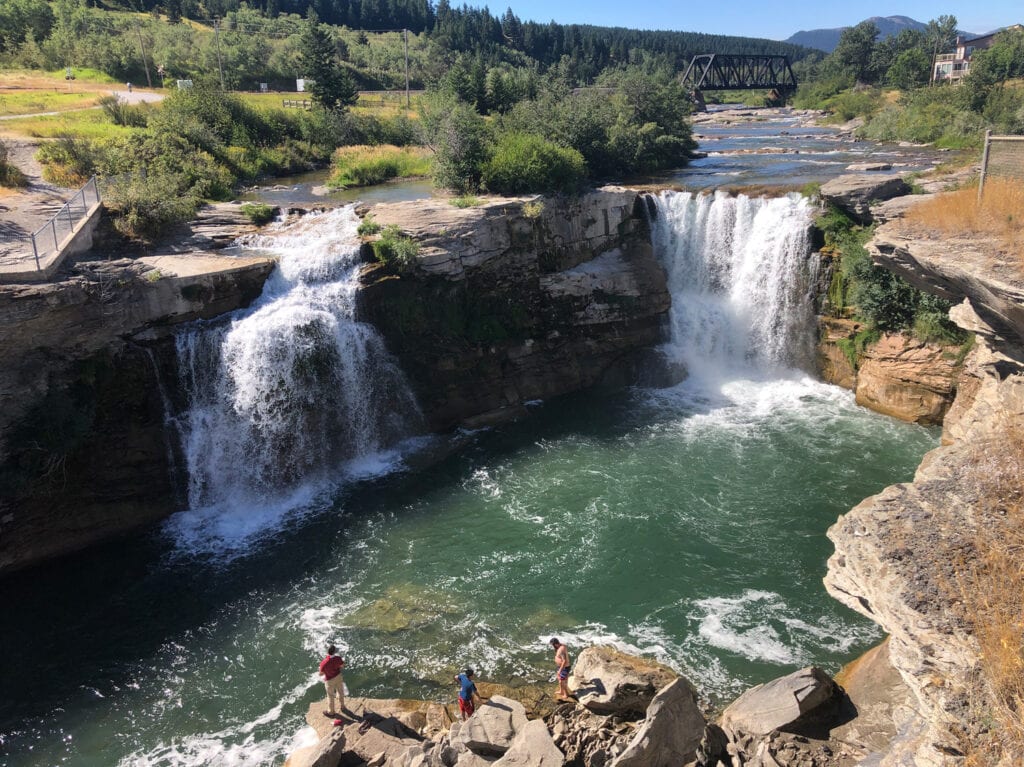
Lamont Pond is a stocked rainbow trout fishing pond located approximately two kilometres northeast of the Town of Lamont, Alberta.
It offers a convenient trout fishing opportunity for anglers living in Lamont, Bruderheim, Fort Saskatchewan and communities northeast of Edmonton.
The pond is part of an established Alberta Conservation Association fish stocking program and has been used for recreational trout fishing for many years.
Although it is usually described as a small fishing pond, Lamont is deeper than many anglers might expect. Fisheries research has measured a maximum depth of approximately 6.7 metres.
However, the pond also has a history of water quality challenges that can affect how long stocked trout survive.
Understanding that history is useful if you are planning a visit and wondering why fishing can vary so much throughout the season.
Where Is Lamont Pond?
Lamont Pond is located northeast of the Town of Lamont in Lamont County, approximately 60 kilometres northeast of Edmonton.
The Alberta Conservation Association identifies the pond at:
SW 27, Township 55, Range 19, West of the Fourth Meridian.
From Lamont, travel north along 48 Street for approximately 1.6 kilometres, then east for another 1.6 kilometres.
The pond is on the north side of the road.
Public access is provided from the gravel road along the western shoreline.
The pond is outside the main residential area of Lamont, so make sure your navigation app is directing you to the stocked fishing pond rather than another community water feature.
What Fish Are in Lamont Pond?
Rainbow trout are the primary fish species.
Lamont Pond has a documented history of rainbow trout stocking through Alberta Conservation Association and its partners.
The program provides fishing opportunities in an area where natural trout lakes are relatively uncommon.
Rainbow trout are recognizable by their dark spots and the pink or reddish band that often runs along their sides.
Many stocked fish are approximately 20 centimetres long when released, although their size can change between stocking events.
There is no reliable evidence that Lamont Pond supports established recreational populations of northern pike, walleye or yellow perch.
Some fishing websites display information about those species because they are covered by general regional fishing regulations.
That does not mean they are present in the pond.
If you are planning a visit, rainbow trout should be your main target.
Is Lamont Pond Stocked Regularly?
Yes.
Lamont Pond is one of Alberta Conservation Association’s established fish stocking locations.
The pond has received rainbow trout for many years, with stocking generally taking place in spring.
Recent provincial records confirm that rainbow trout remain the focus of the stocking program.
The program is supported by several partners, including the Town of Lamont and the Lamont Fish and Game Association.
These partnerships help maintain recreational fishing opportunities for local residents and visitors.
However, the number of fish released is not the same as the number of trout remaining in the pond.
Stocked fish may be caught by anglers, eaten by predators or lost because of environmental conditions.
Some fish may survive longer, but the pond’s documented water quality problems make it unwise to assume large numbers of older trout are always present.
For the latest stocking date and number of fish released, consult Alberta’s current fish stocking records.
How Deep Is Lamont Pond?
Lamont Pond is relatively deep for a small community fishing destination.
In a fisheries study conducted during 2014, Alberta Conservation Association measured the pond’s physical characteristics.
Researchers reported:
Surface area: Approximately 5.6 hectares
Average depth: Approximately 4.4 metres
Maximum depth: Approximately 6.7 metres
These measurements are useful because the pond has more depth than many shallow prairie fishing ponds.
Trout can move between different depths as conditions change.
However, deeper water does not automatically mean that trout will survive throughout summer or winter.
Oxygen levels can become a limiting factor, particularly in ponds with high nutrient concentrations.
That is an important part of Lamont Pond’s fishing history.
Why Can Fishing Be Difficult at Lamont Pond?
This is one of the most useful things to understand before visiting.
Alberta Conservation Association has studied Lamont Pond because some stocked trout fisheries experience poor fish survival even when they receive regular stockings.
During its 2014 research, ACA found that dissolved oxygen concentrations at Lamont sometimes dropped to levels stressful or unsuitable for rainbow trout.
The pond also had unusually high water turbidity compared with other stocked ponds included in the study.
Researchers recorded relatively few trout during some of their later summer sampling visits.
A subsequent water quality investigation in 2021 found that Lamont Pond had high nutrient concentrations and experienced prolonged periods of very low dissolved oxygen.
These findings help explain why fishing can be inconsistent.
A pond may receive thousands of trout in spring without supporting the same number of fish several months later.
The research is historical and does not establish current fish survival rates.
However, it does show that environmental conditions deserve as much attention as stocking numbers when evaluating Lamont Pond.
Why Does Oxygen Matter for Rainbow Trout?
Rainbow trout need enough dissolved oxygen in the water to survive.
When oxygen levels decline, trout can become stressed, stop feeding or die.
Small fishing ponds can experience oxygen problems when nutrients encourage heavy algae and plant growth.
As organic material decomposes, oxygen is consumed.
This can become especially important during warm weather and beneath winter ice.
Lamont Pond has been included in ACA research investigating ways to improve water quality and fish survival at stocked ponds.
Those studies have examined whether reducing nutrient availability could help maintain healthier oxygen levels.
The research does not mean that fishing is always poor.
It explains why the pond’s stocking history alone cannot predict how many trout will be available on any particular visit.
Does Lamont Pond Have Large Rainbow Trout?
Larger rainbow trout are possible in stocked ponds when fish survive long enough to grow.
However, I could not find a reliable recent fisheries survey establishing the average size of trout currently living in Lamont Pond.
Most documented stockings consist of ordinary catchable rainbow trout rather than trophy sized fish.
The pond’s historical oxygen problems also make it difficult to assume that fish routinely survive for several growing seasons.
For a first visit, I would expect a typical stocked rainbow trout fishery.
If larger fish are present, they should be considered a possibility rather than the main reason to travel here.
Is Lamont Pond Popular With Anglers?
Lamont Pond has a longstanding connection with local recreational fishing.
In 2014, Alberta Conservation Association used remote cameras to estimate fishing activity at several stocked ponds across Alberta.
Researchers estimated approximately 472 hours of angling activity at Lamont Pond during the study period.
That confirms the pond was being used by recreational anglers, although it received considerably less fishing effort per hectare than some of the busier ponds included in the research.
These figures are historical.
They do not establish how crowded the pond is today.
Fishing pressure can change with stocking schedules, weather and community events.
For anglers living around Lamont, the pond remains a convenient local destination without needing to travel to a larger lake.
Kids Can Catch at Lamont Pond
Lamont Pond has also played a role in introducing children to fishing.
The Lamont Fish and Game Association has organized Kids Can Catch events, with support from Alberta Conservation Association and local community partners.
These events are designed to give young people an opportunity to learn fishing skills and spend time outdoors.
Previous programs have included equipment and instruction for children who are new to fishing.
It is a useful community connection because many fishing ponds exist primarily to provide accessible angling opportunities close to home.
Lamont Pond serves that purpose for families in the surrounding area.
Event dates and activities can change, so check announcements from the Lamont Fish and Game Association if you are interested in participating.
What Facilities Are Available at Lamont Pond?
Lamont Pond is an ACA conservation fishing site rather than a developed provincial park.
The official site listing identifies access along a gravel road beside the western shoreline.
Visitors should expect a relatively basic fishing area rather than the facilities of a large recreation park.
The site is intended for day use, with access to the pond on foot.
Historical ACA maintenance records also document work involving the access road, parking, grass cutting and basic visitor facilities.
However, those older records should not be taken as a guarantee that every facility remains available today.
I could not confirm a currently maintained boat launch or campground at the pond.
If you are planning a visit that depends on a fishing dock, accessible platform or washroom, check the latest local information before travelling.
Is Lamont Pond Worth Fishing?
Lamont Pond is worth considering if you live northeast of Edmonton and want a nearby stocked rainbow trout fishery.
Its main advantage is convenience.
You do not need to travel to the foothills or a remote natural lake to have an opportunity to catch trout.
The longstanding stocking program also makes it a recognizable fishing destination for the surrounding communities.
But expectations should be realistic.
Alberta Conservation Association research has documented environmental conditions that can limit trout survival.
That means a history of regular stocking does not necessarily translate into consistently productive fishing throughout the year.
For anglers already visiting Lamont or travelling through the area, the pond is a sensible place to investigate.
Confirm the access location, check the most recent stocking report and remember that current water conditions matter just as much as the number of trout released.