Lower Wildhorse Lake is located approximately 25 kilometres southwest of Hinton, near Highway 16, and is stocked with Rainbow and Brook trout.
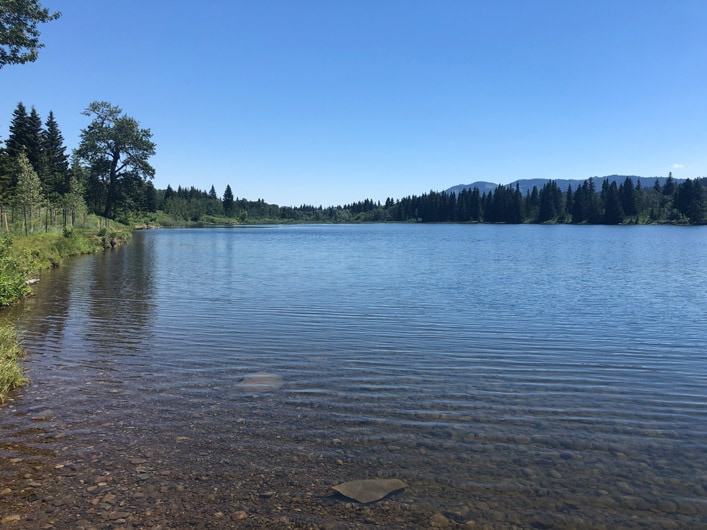
Surrounded by forest with views of the Alberta Rockies, it is a convenient place to spend a few hours fishing for rainbow trout without travelling deep into the backcountry.
The lake is part of the Wildhorse Lakes area, which includes two small lakes with different trout stocking histories.
That distinction matters because anglers looking for rainbow trout and brook trout may want to fish different water.
If you are visiting Hinton, camping near Jasper or exploring the surrounding foothills, Lower Wildhorse Lake is worth considering for a relaxed trout fishing trip.
What Fish Are in Lower Wildhorse Lake?
Rainbow trout are the main species to target at Lower Wildhorse Lake.
Alberta’s recent stocking records consistently identify rainbow trout being released into the lower lake.
The nearby Upper Wildhorse Lake has a different stocking history and receives brook trout.
Older fishing information sometimes combines the two lakes under the name Wildhorse Lakes, making it difficult to tell which species was stocked where.
For that reason, anglers should check the specific lake name on stocking reports rather than assuming both lakes receive the same fish.
There is not enough recent survey information to reliably describe the abundance of other fish species in Lower Wildhorse Lake.
For a first visit, I would plan around rainbow trout.
What About Brook Trout?
Brook trout are an important part of the Wildhorse Lakes stocking program, but recent records place their stocking in Upper Wildhorse Lake.
For example, the May 28, 2026 stocking report lists 2,500 brook trout released into Upper Wildhorse Lake.
Those fish averaged 5.2 centimetres at stocking.
That is considerably smaller than the rainbow trout released into Lower Wildhorse Lake.
The difference matters to anglers.
Small brook trout stocked into the upper lake should not be confused with catchable sized rainbow trout stocked into the lower lake.
If your main goal is catching brook trout, make sure you are researching the upper lake rather than relying on a general Wildhorse Lakes listing.
Where Is Lower Wildhorse Lake?
The Wildhorse Lakes area is located southwest of Hinton, off Highway 16.
Wildhorse Lake Provincial Recreation Area provides established public access, camping and recreational facilities.
Alberta Parks describes the destination as a pair of small mountain lakes suitable for trout fishing, paddling and camping.
The surrounding forest and mountain views make it a pleasant alternative to busier fishing destinations.
If you are travelling from Edmonton, this is a possible stop during a fishing weekend in the Hinton area.
For visitors staying in Hinton, the drive is much shorter.
Can You Fish Lower Wildhorse Lake From Shore?
Yes. Shore fishing is a practical option, and the Wildhorse Lake recreation area includes developed access and a fishing pier.
A light spinning rod is enough for most rainbow trout fishing.
I would start near established access points and watch the water before making the first cast.
Look for trout rising.
Small ripples.
Fish cruising near shore.
Or insects gathering on the surface.
If you see activity, concentrate your casts around that area.
When nothing is happening near the surface, try fishing slightly deeper.
The lake is small enough that you do not need extremely long casts to begin exploring.
When Is Fishing Best?
Spring and early summer are natural times to consider visiting because they follow the main trout stocking period.
Recently stocked fish may be easier to locate, although catches are never guaranteed.
During warmer summer weather, early morning and evening are good starting points.
Trout generally prefer cooler water, and their activity can change when the lake becomes warm.
Cloudy conditions can also be productive.
If you arrive during a bright afternoon and see no surface activity, that does not necessarily mean the lake is empty.
The fish may be feeding deeper or less actively.
Camping and Boating at Wildhorse Lake
Wildhorse Lake Provincial Recreation Area has an established campground.
Tourism information lists 19 vehicle accessible campsites and three sites reached on foot.
Facilities include a fishing pier, firepits, toilets and a fish cleaning station.
Canoes and kayaks are also popular ways to explore the lake.
A small watercraft can help anglers reach shoreline areas beyond normal casting distance.
However, Alberta Parks has an ongoing low water advisory for the Wildhorse Lake launching area.
The advisory, updated in August 2026, warns that the floating dock sits in very shallow water and that the surrounding ground can be muddy.
If you plan to bring a boat or kayak, check the latest park information before travelling.
Lower Wildhorse Lake Fishing Questions
Is Lower Wildhorse Lake stocked every year?
Recent records show rainbow trout stockings in both 2025 and 2026. Stocking can change, so consult the latest Alberta fish stocking report before future trips.
Are there brook trout in Lower Wildhorse Lake?
Older information mentions brook trout in the Wildhorse Lakes area, but recent provincial stocking records distinguish between the two lakes. Lower Wildhorse receives rainbow trout, while Upper Wildhorse receives brook trout.
Can beginners fish here?
Yes. The lake is a reasonable destination for beginners, with established public access and stocked rainbow trout.
A light spinning rod and a few small trout lures are enough to get started.
Can you fish without a boat?
Yes. Shore fishing and developed fishing access make a boat unnecessary for a basic trout fishing trip.
Is Lower Wildhorse Lake worth fishing?
If you are already visiting Hinton or camping in the surrounding area, it is worth considering.
The lake receives regular rainbow trout stockings, has convenient recreational access and offers attractive mountain scenery.
It is not necessary to plan an entire vacation around this small lake.
But for a quiet morning of trout fishing near Hinton, Lower Wildhorse Lake is a practical option.