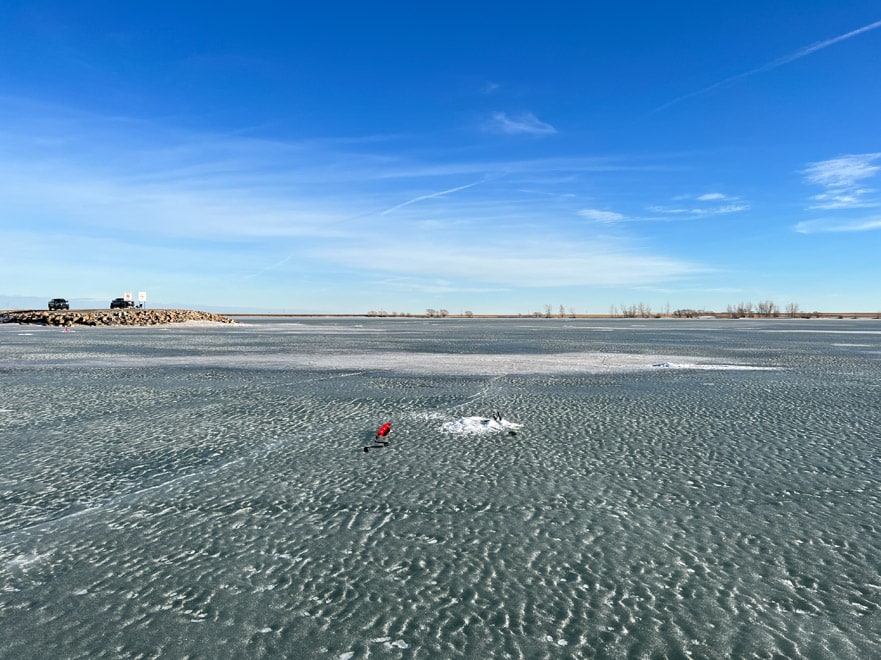
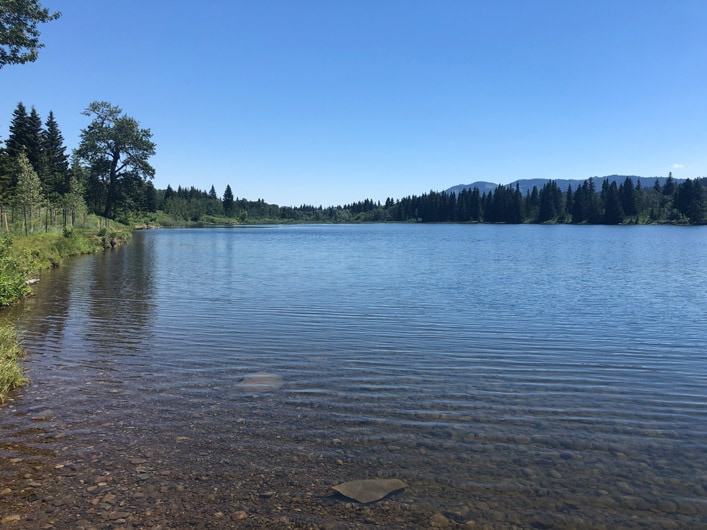
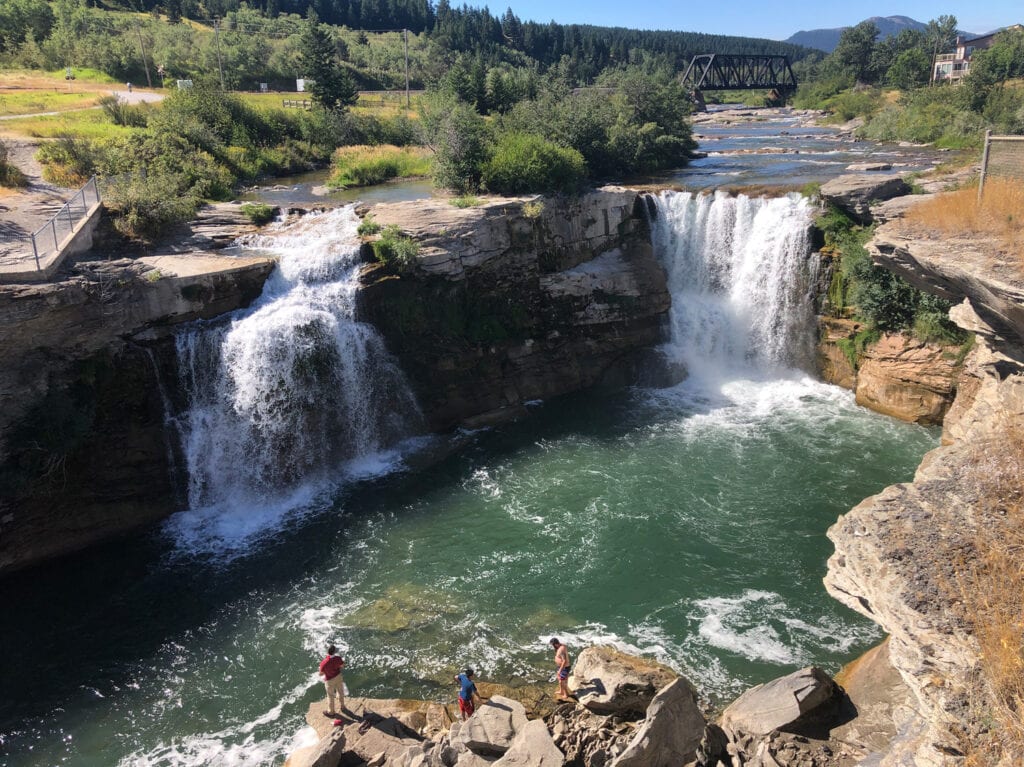
McVinnie Reservoir is a small stocked trout pond north of Picture Butte and Lethbridge, Alberta. It is one of the lesser known fishing destinations in southern Alberta, offering an opportunity to catch rainbow trout and tiger trout without travelling into the mountains.
Unlike many stocked trout ponds, McVinnie has floating fishing docks and an established conservation area surrounding the water.
The reservoir is managed as part of Alberta Conservation Association’s fish stocking program and receives trout regularly.
For anglers looking for trout fishing near Lethbridge, particularly somewhere outside the city’s busier parks, McVinnie Reservoir is worth knowing about.
Where Is McVinnie Reservoir?
McVinnie Reservoir is located north of Picture Butte in Lethbridge County.
The Alberta Conservation Association identifies the site at SW 33, Township 12, Range 21, West of the Fourth Meridian.
According to the Alberta Discover Guide, anglers travelling from west Lethbridge can take Highway 25 north for approximately 20 kilometres toward Range Road 214, then continue north on Range Road 214 for approximately 18 kilometres.
The access road and conservation site sign are on the east side of the road.
The reservoir is tucked into a rural area surrounded by agricultural land and grassland habitat.
It is not especially visible from the main road, and visitors unfamiliar with the area can easily drive past the access.
Using the official conservation site location rather than simply searching for nearby lakes will help you find the correct entrance.
What Fish Are in McVinnie Reservoir?
Two trout species are regularly stocked.
Rainbow Trout
Rainbow trout are the main fishery at McVinnie Reservoir.
Alberta’s stocking records show repeated rainbow trout releases, with some years receiving multiple groups of fish.
Rainbow trout are generally the most likely catch because more of them are stocked than tiger trout.
Some are released at sizes exceeding 20 centimetres, making them suitable for recreational angling relatively soon after stocking.
Tiger Trout
Tiger trout are the second major attraction.
These distinctive fish are hybrids produced by crossing brown trout with brook trout.
They can be identified by their dark, irregular markings, which often resemble a maze or tiger stripes.
Tiger trout are less widely available than rainbow trout in Alberta’s stocking program.
McVinnie is therefore an interesting destination for anglers who want to catch one without travelling to a remote lake.
Recent stocking records confirm that both rainbow trout and tiger trout remain part of the reservoir’s stocking program.
Although some general fishing websites display northern pike and walleye information for the surrounding fishing management zone, that does not establish either species as a resident fish population at McVinnie.
The available evidence supports treating it primarily as a stocked trout fishery.
Is McVinnie Reservoir Stocked Every Year?
McVinnie has a longstanding trout stocking program through Alberta Conservation Association and its partners.
The conservation site information describes annual stockings, usually taking place in spring.
Both rainbow trout and tiger trout appear in recent stocking records, although the number of fish and their sizes can vary between years.
One important detail is that stocking records only show fish released into the reservoir.
They do not tell you how many fish survive until your visit.
Some trout may be caught soon after stocking, while others may survive longer and grow.
Water conditions, predators, available food and fishing pressure can all affect how many trout remain.
For that reason, a stocking report is useful for confirming which species are present, but it should not be treated as a guarantee of easy fishing.
Are There Big Trout in McVinnie Reservoir?
McVinnie has an interesting history of producing larger trout.
Older Alberta Conservation Association material describes an exceptional rainbow trout caught at the reservoir in 2007.
The fish reportedly weighed approximately 12 pounds and measured 30 inches.
That is an impressive fish for a small stocked trout pond.
However, it is important to keep the report in perspective.
An exceptional catch from nearly two decades ago does not establish that trophy sized trout are common today.
Most trout entering the reservoir through the stocking program are substantially smaller.
Larger fish may be possible if they survive multiple seasons and find sufficient food, but there is no recent publicly available population survey establishing how many trophy trout currently live here.
For a first visit, expect a stocked trout fishing experience rather than assuming the reservoir regularly produces very large fish.
What Facilities Are at McVinnie Reservoir?
One of McVinnie’s biggest advantages is that it has more developed fishing access than many small rural ponds.
Alberta Conservation Association confirms the following facilities:
- Parking area
- Floating fishing docks
- Outhouse
- Garbage bins
- Walking access to the reservoir
The floating docks are particularly useful.
They provide anglers with designated places to fish beyond portions of the shoreline and make the water more approachable for visitors who do not have a boat.
The reservoir is part of a conservation site rather than a developed campground.
The site is intended for day use, with access beyond the parking area on foot.
There is no established campground or maintained boat launch listed in the current conservation site description.
If you are planning an overnight fishing trip, arrange accommodation elsewhere rather than assuming camping is available at the reservoir.
Why Is McVinnie Reservoir Difficult to Fish Sometimes?
Not every angler has a successful trip here.
Some local anglers recommend McVinnie as a good trout fishing alternative to the more familiar ponds around Lethbridge.
Others describe visiting several times without catching anything.
Both experiences are possible at a stocked reservoir.
A few factors can make fishing inconsistent.
The fish may not be close to the docks.
Floating docks provide convenient access, but trout do not necessarily remain in the same area throughout the season.
The fish may be feeding at a different depth.
Trout move through the water column depending on temperature, light and available food.
Stocking does not guarantee continuous fishing success.
Even when thousands of fish have been released, the number remaining changes over time.
The reservoir is small, but fish can still be difficult to locate.
A small waterbody can give anglers the impression that every fish must be within easy casting distance. That is not always the case.
If the docks are not producing, spend some time observing the pond.
Look for trout rising or cruising.
Watch for insect activity.
Pay attention to wind and where surface food is collecting.
Sometimes understanding where fish are feeding is more useful than changing equipment repeatedly.
McVinnie Is Also a Wildlife Conservation Area
The reservoir is only one part of the property.
The surrounding Alberta Conservation Association site covers approximately 152 acres of grassland habitat.
That figure describes the conservation property, not the surface area of the reservoir itself.
The grasslands, shrubs and wetland vegetation provide habitat for songbirds, shorebirds and upland game birds.
Birdwatching is another reason people visit.
You may encounter waterfowl on the reservoir or see birds moving through the surrounding grasslands.
This gives McVinnie a different atmosphere from fishing at an urban pond surrounded by houses and playgrounds.
It is a quieter rural conservation site where fishing and wildlife habitat share the same landscape.
McVinnie Reservoir or Picture Butte Reservoir?
These are different fishing destinations.
Picture Butte Reservoir is a larger recreational waterbody with a different fish community.
McVinnie Reservoir is a much smaller conservation area primarily managed for stocked trout.
If you are looking specifically for rainbow trout or tiger trout, McVinnie is the more relevant destination.
If you want to target northern pike or other species associated with larger prairie reservoirs, research those waters separately.
Do not assume a fishing report from Picture Butte Reservoir applies to McVinnie simply because the two are relatively close together.
Is McVinnie Reservoir Worth Fishing?
McVinnie is a worthwhile option for anglers who enjoy discovering smaller stocked trout fisheries around Lethbridge.
Its main attractions are the regular trout stocking program, the opportunity to catch tiger trout and the floating docks that provide convenient access.
The rural setting is another advantage.
You are surrounded by grassland rather than a busy city park, and the conservation area provides opportunities to observe wildlife.
However, I would not describe McVinnie as a guaranteed easy fishing spot.
Local experiences vary, and there is not enough recent fisheries survey information to make reliable claims about current trout numbers or average catch sizes.
For somebody living in Picture Butte or Lethbridge, it is a practical place to try a different stocked trout pond.
Before visiting, confirm the access location using Alberta Conservation Association’s site information and check the latest provincial stocking report if you want to know which trout species were released most recently.
McVinnie may be small, but the combination of rainbow trout, tiger trout and a dedicated conservation setting makes it a distinctive little fishing destination in southern Alberta.